A dynamic microphone is usually the more practical choice if you record podcasts, stream games, or talk into a mic in a typical bedroom or home office. A condenser microphone makes more sense when you want detailed vocals, acoustic guitar recordings, or studio-style sound in a quiet, controlled space. Neither type is automatically better, and the room you record in can matter just as much as the microphone itself.
Affiliate Disclaimer
This website participates in affiliate programs. We may earn a commission
when you purchase products through links on this page, at no additional
cost to you. Our recommendations are based on independent research and
honest opinions.
The real difference comes down to how each microphone captures sound, how you position it, and what you plan to record. I’ll explain where each type works best, what changes in everyday use, and how two popular XLR microphones, the Shure SM7B and Audio-Technica AT2035, compare.
Condenser vs Dynamic Microphone: The Differences That Actually Matter
Both microphones turn sound waves into electrical signals, but they use different methods to do it. A dynamic microphone uses a diaphragm attached to a coil that moves within a magnetic field. A condenser microphone uses a thin diaphragm and an electrically charged backplate, along with electronic circuitry to produce its output.
That difference affects sensitivity, power requirements, and how each microphone fits into your recording setup. Here’s a quick comparison before we get into the details.
- Sound and sensitivity: Dynamic microphones often have a focused, smooth character and lower sensitivity. Condensers often capture more fine detail and have higher sensitivity.
- Recording space: A dynamic microphone used close to your mouth is a practical fit for spoken-word recording. A condenser can work especially well for vocals and instruments in a quiet, controlled room.
- Background noise: Neither type automatically removes room noise. Microphone distance, polar pattern, and gain settings affect how much unwanted sound you record.
- Power and setup: Passive dynamic microphones generally do not need phantom power. Most XLR condenser microphones do, including the AT2035.
- Best uses: Dynamic microphones are common for podcasts, streams, and live vocals. Condensers are common for studio singing, acoustic instruments, and voiceovers.
- The two examples: The Shure SM7B is a dynamic microphone, while the Audio-Technica AT2035 is a condenser microphone.
One thing worth understanding is that a condenser doesn’t automatically pick up more background noise just because it’s more sensitive. Microphone distance, pickup pattern, gain settings, and the volume of your voice all affect how much room noise reaches your recording.
Why Dynamic Microphones Make Sense for Everyday Recording
Dynamic microphones are especially useful when your recording space isn’t perfect. You might have a computer fan running, occasional traffic outside, or sound bouncing off bare walls. A dynamic mic placed close to your mouth can help you capture a strong voice signal without making the room sound overly noticeable.
That’s why you’ll see dynamic microphones in so many podcasting and broadcasting setups. You can stay close to the mic, maintain a fairly consistent speaking level, and concentrate on what you’re saying instead of worrying about every small sound around you.
- Close-up vocals: A good dynamic mic can give your voice a full, focused sound when positioned properly.
- Durability: Moving-coil dynamic microphones generally tolerate regular handling and demanding recording environments.
- Simple power requirements: Passive dynamic microphones don’t need phantom power, although some require considerable preamp gain.
- Live performance: Their sturdy construction and close-miking approach work well on loud stages.
The main compromise is that some dynamic microphones have fairly low output. You’ll need enough clean gain from your audio interface, especially with models like the Shure SM7B. A cheap interface with a noisy preamp may make an otherwise excellent microphone frustrating to use.
Where a Condenser Microphone Can Sound Better
A condenser microphone can be a great choice when you want to capture the finer details of your voice or an instrument. Small changes in pronunciation, quiet passages, and the natural tone of an acoustic guitar can come through clearly with a well-placed condenser.
That extra detail is useful in a good recording environment, but it also means you need to pay attention to your surroundings. Hard walls, distant traffic, and a noisy air conditioner can become noticeable when you record from farther away. A quiet room and sensible microphone placement make a considerable difference.
- Studio vocals: They can capture subtle vocal details and a natural sense of presence.
- Acoustic instruments: Condensers often work well for guitar strings, piano, and other sounds with delicate high-frequency detail.
- Voiceovers: A controlled room lets you capture clear speech without excessive room reflections.
- Flexible placement: Many condensers provide healthy output levels, so you have more freedom to experiment with distance.
Most XLR condenser microphones need phantom power, commonly supplied by an audio interface or mixer. You’ll also want a shock mount, a pop filter for close-up vocals, and a reasonably quiet recording space.
Your Recording Room Matters More Than You Might Expect
Your room can make an expensive microphone sound disappointing. If you’re recording beside a bare wall or in a room with lots of hard surfaces, your voice can bounce around before reaching the microphone. That reflected sound creates the hollow, distant quality you sometimes hear in home recordings.
The easiest improvements don’t necessarily require expensive acoustic panels. Soft furnishings, curtains, rugs, and a sensible recording position can reduce distracting reflections. More importantly, keeping the microphone appropriately close to your mouth increases the level of your voice relative to room sounds.
Microphone direction matters too. Both the Shure SM7B and Audio-Technica AT2035 use cardioid pickup patterns, which favor sound from the front and reduce pickup from the rear. Neither is a magic noise-canceling microphone, and neither can completely remove background sounds.
So, before spending more on a microphone, consider where you’ll record and how much control you have over the environment. That decision will often tell you which type makes more sense.
Two Microphones Worth Considering for Different Recording Setups
Once you know your recording space and main use, the choice becomes easier to narrow down. The Shure SM7B is geared toward close-up speech and vocals, while the Audio-Technica AT2035 offers a less expensive entry into detailed condenser recording. They’re not direct substitutes, and the equipment you’ll connect them to matters.
1
Shure SM7B Review: Best for Serious Podcasting and Streaming
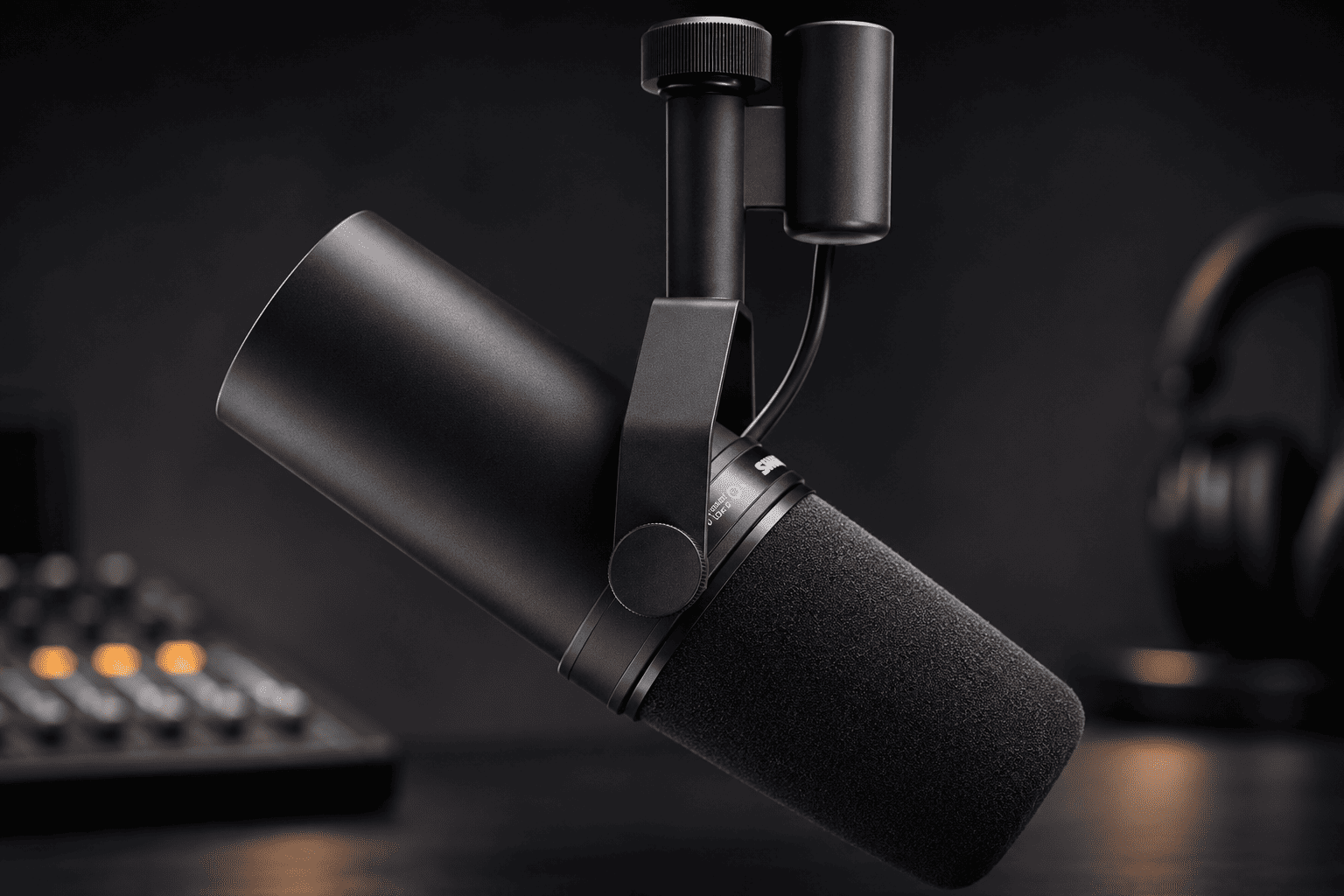
The Shure SM7B dynamic microphone is a familiar choice for broadcast-style vocals, podcasting, and streaming. At the supplied Amazon listing price of $369, it’s a considerable investment, especially if you’re buying your first XLR setup. What you’re paying for is a rugged, purpose-built microphone that works particularly well when you speak close to it.
Its cardioid pickup pattern and internal air-suspension shock isolation help reduce unwanted off-axis sound and mechanical vibration. The included foam windscreens also help control bursts of air from letters like P and B. With careful placement, you can get that full, intimate spoken-word sound many people associate with professional podcasts.
The SM7B has rear switches for bass rolloff and a midrange presence boost, so you can make modest adjustments before editing. Its shielding is useful around electronic equipment, although it won’t eliminate room echo or loud distractions. The microphone also uses an XLR connection, so it isn’t something you plug directly into a computer’s USB port.
Here’s the purchase detail I wouldn’t ignore: the SM7B has a low output level. Shure recommends a preamp with more than 60 dB of gain, or an inline booster if your interface can’t provide enough clean gain. Add the price of an interface, cable, and sturdy boom arm to your budget. Some inline boosters need phantom power, even though the SM7B itself does not.
- Best fit: A dedicated podcast or streaming setup where you can keep the mic close.
- Think twice if: You want simple USB plug-and-play recording or already have a tight equipment budget.
2
Audio-Technica AT2035 Review: Best for Detailed Home Studio Recording

The Audio-Technica AT2035 condenser microphone is a strong choice if you’re building a home studio for vocals, voiceovers, or acoustic instruments. At the supplied Amazon listing price of $159, it costs substantially less than the SM7B and leaves more room in your budget for an audio interface or basic room treatment. Its large-diaphragm design aims for a natural, detailed sound rather than a particularly broadcast-like character.
The AT2035 has a cardioid pickup pattern, a supplied shock mount, and a 20 Hz to 20 kHz stated frequency response. Its switchable 80 Hz high-pass filter can reduce low-frequency rumble, while the 10 dB pad gives you extra headroom for loud sources. Those controls make it useful beyond spoken-word recording, particularly if you also sing or record instruments.
In a quiet room, a condenser like this can make a voice feel open and articulate. In a reflective bedroom, though, your mic position and room acoustics still need attention. If you sit far from the mic, you may end up recording more room sound than you want, regardless of how good the microphone is on paper.
You’ll need an XLR audio interface or mixer that supplies phantom power. Audio-Technica specifies 11 to 52 volts, and a typical interface’s 48 V setting works. The supplied shock mount is helpful, but you’ll generally want an appropriate stand, XLR cable, and a pop filter for vocals. Check your complete setup cost before comparing it with simpler USB options.
- Best fit: Singing, acoustic instrument recording, and voiceovers in a reasonably controlled room.
- Think twice if: Your main job is talking beside a loud computer or in an echoey shared space.
What to Check Before You Spend Money on Either Microphone
A microphone isn’t the whole recording setup. The right interface, placement, and room conditions will often give you a bigger improvement than simply choosing the more expensive model. These are the details I’d check before ordering.
- Your main recording job: Mostly podcasts and live commentary? Start with a dynamic mic. Recording singing and acoustic guitar too? A condenser may give you more flexibility.
- Audio interface: Both featured microphones use XLR, not direct USB. The SM7B needs plenty of clean gain; the AT2035 needs phantom power.
- Your room: Reflections and noise affect both types. If you cannot treat the space, close microphone placement is especially important.
- Mic technique: Consistent distance and speaking direction matter more than a dramatic-looking mic arm.
- Total cost: Include the interface, XLR cable, mounting hardware, and any pop filter or gain booster you actually need.
You also don’t need to assume the more expensive microphone will make you sound better. A properly positioned AT2035 in a quiet room can outperform a poorly set up SM7B for the recording you want, and the reverse can be true in a noisy podcasting space.
Final Recommendation: Which Microphone Should You Actually Buy?
For podcasting, streaming, and close-up spoken-word recordings, I’d lean toward the Shure SM7B if your budget includes a suitable audio interface and you’re comfortable working with XLR gear. Its practical design, sound-shaping switches, and strong close-mic performance are compelling for a dedicated voice setup.
For home-studio vocals, acoustic instruments, and detailed voiceovers, I’d choose the Audio-Technica AT2035, especially if your room is reasonably quiet. It’s substantially cheaper based on the prices provided, and its condenser design offers flexibility for several recording tasks. Neither microphone fixes a noisy room by itself, so choose based on your space and workflow rather than the type alone.