Artificial intelligence isn’t just for tech companies or software developers anymore. Today, AI can help you manage everyday tasks around the house, improve home security, automate routines, and even create a more comfortable living environment. The best part is that you don’t need an expensive smart home or advanced technical skills to get started.
Affiliate Disclaimer
This website participates in affiliate programs. We may earn a commission
when you purchase products through links on this page, at no additional
cost to you. Our recommendations are based on independent research and
honest opinions.
In this guide, I’ll show you five practical ways to use AI at home without making your life more complicated. You’ll also see how a couple of AI-powered smart home devices can make those everyday tasks even easier if you’re ready to take the next step.
Why More People Are Bringing AI Into Their Homes
Not long ago, smart homes felt like something reserved for expensive houses filled with complicated technology. Today, that’s changed. AI-powered devices have become easier to use, more affordable, and far more practical than they were just a few years ago.
The biggest advantage isn’t that AI replaces your daily routine. Instead, it quietly handles repetitive tasks, answers questions, manages connected devices, and helps your home respond more intelligently to what you need. Once you get used to it, many of these conveniences quickly become part of your everyday routine.
What Does AI Actually Do Inside Your Home?
Artificial intelligence helps smart devices understand information and respond automatically instead of simply following fixed commands.
For example, a traditional motion sensor may only detect movement. An AI-powered camera can often recognize whether the movement came from a person, a pet, or a passing vehicle. Likewise, a smart speaker doesn’t just hear your voice. It understands what you’re asking and responds in a natural way.
That intelligence allows devices to become more helpful over time without making them more difficult to use.
1. Use AI as Your Everyday Voice Assistant
One of the easiest ways to begin using AI at home is through a voice assistant. Instead of reaching for your phone every time you need information, you simply ask.
Modern AI assistants can help with everyday tasks such as:
- Setting reminders
- Creating shopping lists
- Answering questions
- Reading the weather forecast
- Playing music
- Controlling smart home devices
- Managing timers while cooking
- Reading your calendar
Even if you never build a complete smart home, a good AI speaker can save surprising amounts of time throughout the day.
2. Let AI Improve Your Home Security
Home security has become much smarter thanks to artificial intelligence.
Instead of recording everything continuously, many modern cameras can recognize important events. They may distinguish between people, pets, packages, and vehicles, reducing the number of unnecessary alerts you receive.
Some systems can even learn familiar faces, making notifications much more useful than simple motion detection.
As AI continues improving, these systems become better at identifying unusual activity while reducing false alarms.
3. Automate Your Daily Routine
One of my favorite things about AI isn’t that it performs complicated tasks. It’s that it quietly handles small repetitive jobs you don’t want to think about every day.
Imagine waking up and having your bedroom lights gradually brighten, your weather forecast read aloud, your favorite playlist begin playing, and your coffee maker switch on automatically. None of these actions require you to press multiple buttons because AI coordinates everything in the background.
Some common home automations include:
- Morning routines
- Evening lighting schedules
- Automatic temperature adjustments
- Smart appliance control
- Energy-saving routines
- Vacation modes while you’re away
Even a few simple automations can make your home feel much more convenient.
4. Make Entertainment Smarter
Artificial intelligence has quietly transformed how we watch movies, listen to music, and discover new content.
Streaming services learn your preferences over time, recommending movies and songs based on what you’ve already enjoyed. Smart speakers can recognize different voices in your household and personalize responses for each family member.
The result is an entertainment experience that feels more personal without requiring constant manual adjustments.
5. Improve Sleep and Daily Comfort
AI isn’t always about productivity. Sometimes it’s simply about making your home more comfortable.
Many smart home devices now adjust lighting, temperature, background sounds, and reminders based on your habits. Some even help create healthier bedtime routines by reducing distractions and creating a relaxing environment before you go to sleep.
These small improvements may seem minor individually, but together they can noticeably improve your daily routine.
AI Works Best When Your Devices Work Together
As you start adding AI-powered devices around your home, you’ll notice something interesting. The real benefit doesn’t come from owning lots of smart gadgets. It comes from having them communicate with one another.
A smart speaker becomes much more useful when it controls your lighting. Security cameras become more effective when they’re connected through a central hub. Instead of managing several separate devices, AI helps create a system where everything works together more naturally.
If you’re ready to move beyond basic AI features, the next two products show how modern smart home technology is becoming both easier to use and more practical for everyday life.
1
Gemini Home Speaker with AI Voice Assistant Review: Best Smart Speaker for Beginners
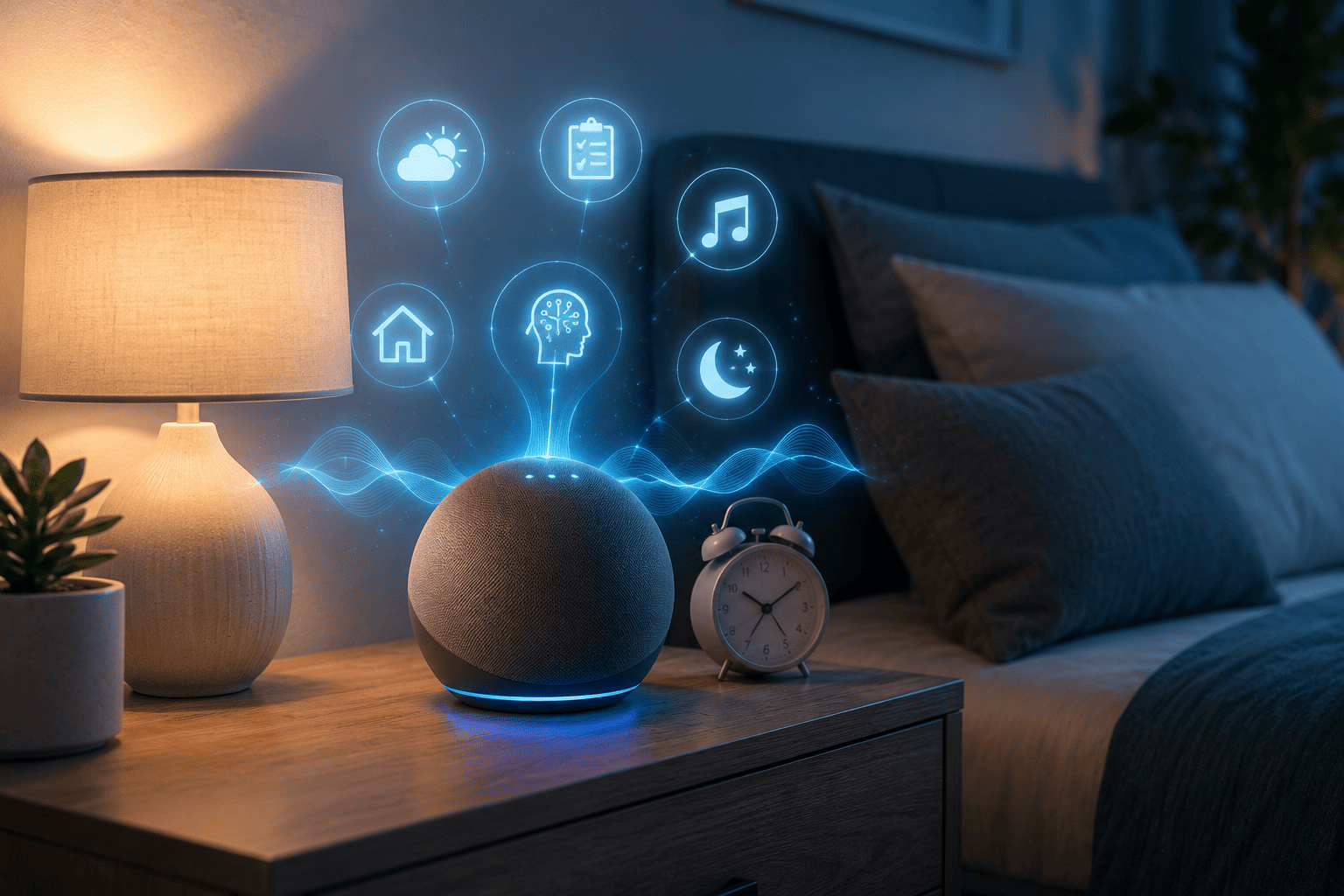
If you’re looking for the easiest way to introduce AI into your home, the Gemini Home Speaker with AI Voice Assistant is an excellent place to start. At around $79.95, it combines an AI voice assistant, Bluetooth speaker, white noise machine, bedside clock, and night light into one compact device that fits naturally on a desk or nightstand.
What I like most is that it doesn’t try to do one complicated thing exceptionally well. Instead, it handles several everyday tasks that most people actually use. You can ask questions, set reminders, play music, check the weather, control compatible smart devices, or simply use it to create a more relaxing bedroom environment.
The built-in 16 white noise and sleep sounds are particularly useful if you enjoy background sounds while sleeping or working. The eight RGB lighting modes add a pleasant bedside glow without feeling distracting, while the LED clock keeps everything organized in one place.
Some of the standout features include:
- AI voice assistant access
- Bluetooth speaker functionality
- Built-in microphone
- Sixteen sleep and relaxation sounds
- Eight RGB night light modes
- LED clock display
- Compact bedside design
Sound quality is surprisingly rich for a speaker of this size, and setup is simple enough that most people can be up and running within a few minutes. If you’re buying your first AI home device, this offers excellent value because it combines several products into one affordable package.
2
Tapo CentralHub H500 Review: Best AI Smart Home Hub

If you’re planning to expand beyond a single smart device, the Tapo CentralHub H500 is one of the most practical upgrades you can make. Priced at around $149.99, it acts as the central control point for compatible Tapo devices while improving the intelligence of your home security system.
One feature I particularly appreciate is its ability to improve camera AI accuracy. Instead of each camera working completely on its own, the hub helps process information more efficiently while keeping recordings organized in one location. That means smarter notifications and fewer false alerts when something moves outside your home.
The hub supports up to 16 Tapo cameras and 64 sub-GHz sensors, making it suitable for both smaller homes and more advanced smart home setups. It also includes 16GB of built-in storage, with the option to expand storage using a standard SATA drive if you need additional recording space.
Some features worth highlighting include:
- Connects up to 16 Tapo cameras
- Supports 64 smart sensors
- Improves AI detection accuracy
- Sixteen gigabytes of built-in storage
- Expandable SATA storage
- Centralized smart home management
- Faster local device communication
Installation is straightforward if you’re already using Tapo products, and the centralized management makes daily monitoring much easier than switching between multiple devices. For homeowners who plan to continue expanding their smart home, this hub provides a strong foundation.
Conclusion
Artificial intelligence doesn’t have to be complicated or expensive to make a real difference at home. Even simple AI-powered devices can save time, automate routine tasks, improve security, and make everyday life a little more convenient.
The key is to start with practical solutions instead of chasing every new gadget that reaches the market. As your needs grow, you can gradually expand your smart home with devices that work together naturally. Before long, you’ll discover that the best AI isn’t the technology you constantly notice. It’s the technology that quietly helps your home run more smoothly every single day.