Sous vide cooking means sealing food in a bag and cooking it in a precisely controlled water bath. Instead of placing your steak over high heat and hoping the middle reaches the right temperature, you choose the water temperature and let the food cook gently and evenly. The result can be remarkably consistent, especially for steak, chicken, fish, and other foods that are easy to overcook.
Affiliate Disclaimer
This website participates in affiliate programs. We may earn a commission
when you purchase products through links on this page, at no additional
cost to you. Our recommendations are based on independent research and
honest opinions.
A sous vide machine is worth considering if you cook proteins regularly, want repeatable results, or enjoy preparing meals ahead of time. It isn’t essential for every kitchen, though. Cooking takes planning, and you’ll often need a skillet or grill to add the browned exterior that makes food taste finished.
I’ll explain how sous vide works, what you can realistically cook with it, and what to look for before buying an immersion circulator. We’ll also compare two options at different prices, including one with Wi-Fi and one with straightforward manual controls.
What Sous Vide Cooking Actually Means in Everyday Terms
The French phrase sous vide translates to “under vacuum,” but you don’t always need a vacuum sealer to get started. Many home cooks use food-safe resealable bags and carefully remove the air using the water-displacement method. The important part is keeping water out of the bag and getting the food surrounded by the controlled water temperature.
An immersion circulator attaches to a pot or suitable container. It heats the water and moves it around so the temperature stays relatively even throughout the bath. You choose a temperature and cooking time based on the food, its thickness, and a trusted recipe.
Here’s the basic routine:
- Prepare the food: Season it and place it in a bag suitable for the planned cooking temperature.
- Remove the air: Vacuum seal the bag or use the displacement method with an appropriate food-safe bag.
- Heat the water: Attach the circulator, fill to the permitted level, and select a verified time and temperature.
- Cook in the bath: Keep the food submerged without blocking water circulation.
- Finish if needed: Dry meat thoroughly and sear it briefly in a hot pan or on a grill for color and flavor.
Unlike boiling, sous vide doesn’t mean the water must reach 212°F. Many foods cook at significantly lower temperatures, with carefully selected time and temperature combinations providing both the desired texture and, when required, safe pasteurization.
Why Sous Vide Can Make Steak and Chicken More Consistent
The main advantage is control. In an oven or skillet, the outside of a thick piece of meat gets much hotter than the center. That’s useful for browning, but it also creates a greater risk of overcooking the outer layers while waiting for the middle to finish.
A properly controlled water bath brings the food toward the chosen temperature more gently. The center still needs time to heat through, but the difference between the outside and inside can be much smaller than with high-heat methods.
You might appreciate this for several reasons:
- Repeatable doneness: A properly chosen setting makes it easier to produce similar results across different cooking sessions.
- Less temperature overshoot: Foods are less likely to shoot far beyond the water-bath temperature during the bath stage.
- Convenient meal prep: You can portion and season food ahead of cooking and finish it close to serving time.
- More predictable texture: Temperature control helps with delicate proteins and certain vegetables or eggs.
Sous vide doesn’t guarantee that every cut becomes tender, and longer cooking isn’t always better. Some foods turn soft or mushy after excessive time in the bath. You still need a recipe that matches the food and thickness.
What Foods Are Actually Worth Cooking Sous Vide?
Steak attracts most of the attention, but a sous vide cooker can do more than reproduce restaurant-style beef. Its value depends on how frequently you cook foods that benefit from precise temperatures and repeatable results.
Steak and pork chops: These are good candidates when you want consistent doneness from edge to edge. A short, hot sear afterward develops the browned surface that a water bath cannot create.
Chicken breast: A controlled bath can help prevent the dry, stringy texture that comes from overcooking. Because poultry safety depends on time as well as temperature, follow a validated sous vide recipe rather than guessing.
Fish and seafood: Gentle heat can provide delicate textures, although thin fish fillets may cook quickly enough that a conventional pan is easier. Proper handling and food-safe cooking guidance remain important.
Eggs: Changing the temperature can change the relationship between set whites and soft yolks. Eggs can be interesting experiments, but they demand precise recipes and careful handling.
Vegetables and custards: Carrots, potatoes, and certain desserts can benefit from controlled heating. Some vegetables need much higher bath temperatures than meat, so you shouldn’t expect one setting to work for an entire meal.
If you mainly cook stir-fries, quick pasta dishes, or meals that require active browning, sous vide may get less use. It’s best thought of as another useful method, not a replacement for every appliance you own.
Is Sous Vide Cooking Faster Than an Oven or Stovetop?
Usually, no. Sous vide trades speed for predictability. You’ll need time to heat the water, bring the food to the desired internal temperature, and sometimes hold it long enough to meet validated safety requirements. Finishing the food adds another step.
For a weeknight dinner, heating a skillet and cooking a thin steak may be faster. A thicker steak or a batch of chicken can be easier to manage in a water bath when you’re not trying to watch the pan constantly.
Hands-on time: Often lower after you prepare and bag the food, because the circulator maintains the bath automatically.
Total elapsed time: Frequently longer than conventional cooking, especially when the water needs preheating or the food is thick.
Planning: More important, because the timing and cooling of cooked food affect both convenience and safety.
I’d buy sous vide equipment for control rather than speed. If fast dinners are your only priority, a good skillet, pressure cooker, or air fryer may be more useful.
Do You Need a Vacuum Sealer or Special Sous Vide Container?
You can begin with an immersion circulator, a sturdy pot, and suitable food-safe bags. A vacuum sealer can make bagging easier and more consistent, especially if you prepare multiple portions, but it isn’t mandatory for every recipe.
A lidded container helps reduce evaporation during long cooks. Whatever you use, the cooker must be securely attached, and the water must remain between the manufacturer’s minimum and maximum marks.
- Food-safe bags: Use bags rated by their manufacturer for the intended heating method and temperature.
- A stable container: Choose something heat-resistant and large enough for water to circulate around the food.
- A clip or rack: Helps keep bags submerged without blocking the circulator.
- A skillet: Useful for the final sear on meat after the water bath.
- An accurate thermometer: Helpful for checking equipment and following food-safety practices.
Don’t assume that any plastic bag can be used for warm-water cooking. Follow the bag manufacturer’s guidance, and never let water drop below the circulator’s safe operating range.
Food Safety Matters More Than the Perfect Steak Texture
The biggest misconception about sous vide is that setting a low temperature automatically makes a meal safe. Food safety depends on the entire time-temperature process, including how thick the food is, how long its center takes to heat, and how long it remains at the required temperature.
Conventional USDA minimum internal-temperature guidance is a useful reference for ordinary cooking, but lower-temperature sous vide recipes require validated time-temperature combinations for pasteurization. A temperature alone, without sufficient time, is not a safety instruction.
Keep these habits in mind:
- Use validated recipes: Especially for poultry, ground meats, and foods cooked at lower temperatures.
- Start with safe ingredients: Refrigerate perishables before cooking and avoid leaving them at room temperature.
- Respect heating times: Thick portions need longer for the center to reach bath temperature.
- Chill promptly if storing: Use a rapid cooling method, such as an appropriate ice bath, then refrigerate or freeze promptly under safe conditions.
- Protect vulnerable people: Anyone pregnant, older, immunocompromised, or otherwise at elevated risk should be especially cautious with undercooked animal products.
Vacuum packaging doesn’t sterilize food. The USDA warns that perishable vacuum-packed meat still requires proper refrigeration or freezing. Don’t leave sealed food sitting on a counter simply because it has been vacuum-packed.
Two Sous Vide Machines That Make Sense for Different Kitchens
Once you understand the method, the machine itself is fairly straightforward. An immersion circulator needs to maintain a stable bath temperature, circulate water, fit your preferred container, and offer controls you can comfortably use.
The Anova Precision Cooker 2.0 and the Vpcok Direct 1000W approach that job differently. Anova adds Wi-Fi connectivity and an established app ecosystem. Vpcok emphasizes built-in time and temperature controls at a lower purchase price.
Neither will automatically make you a better cook. Their value comes from how often you’ll use them and whether their controls fit your routine.
1
Anova Precision Cooker 2.0 Review: Best for Connected Cooking
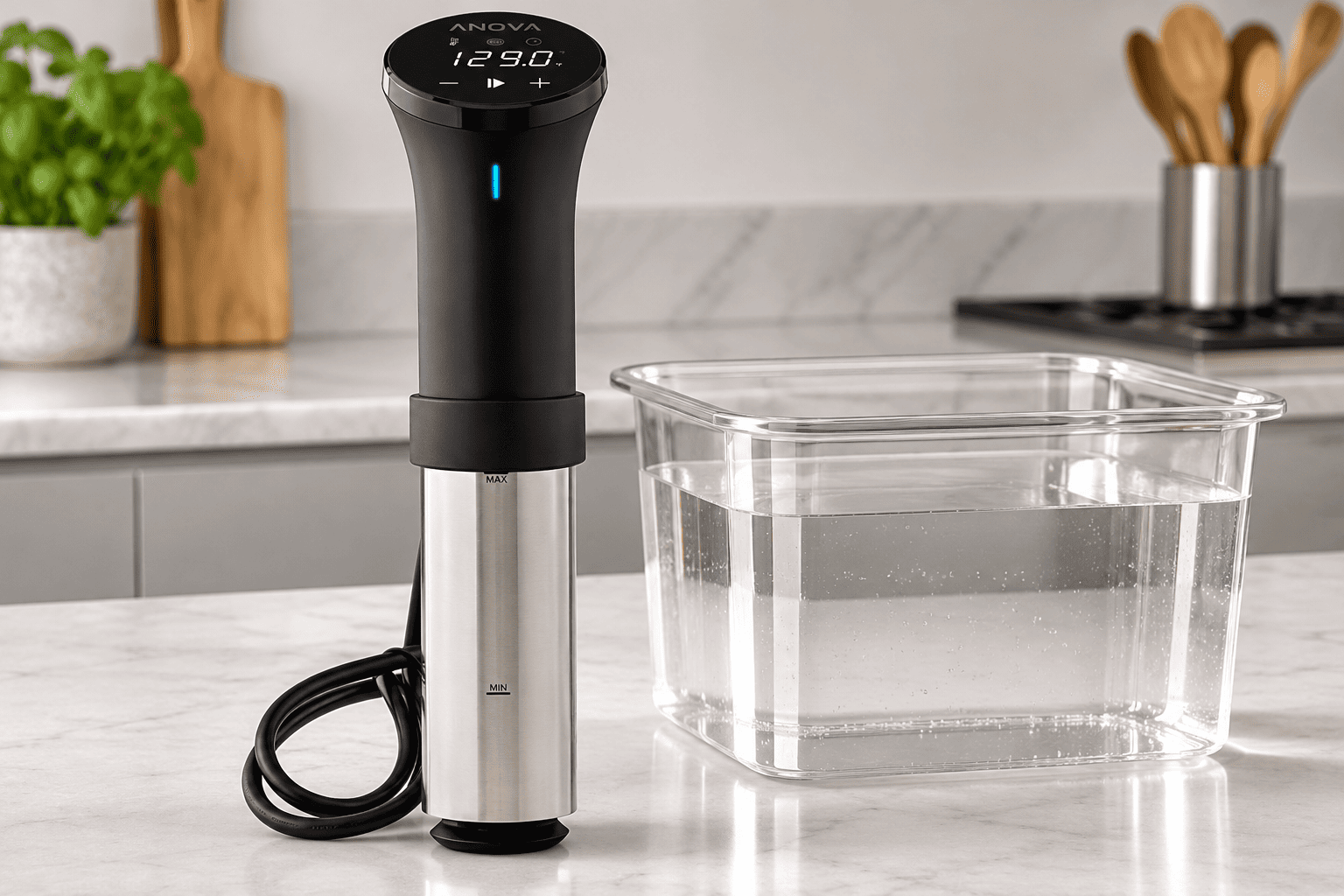
The Anova Culinary Sous Vide Precision Cooker 2.0 is worth considering if you want an immersion circulator with both onboard controls and Wi-Fi connectivity. At the user-provided listing price of $109.99, it costs more than the Vpcok option, but the connected features may appeal if you like monitoring cooking from your phone.
Anova lists a 1000W heater, 2.4 GHz Wi-Fi connectivity, an 8-liter-per-minute flow rate, and a specified temperature accuracy of approximately ±0.1°C for its Precision Cooker. These are manufacturer’s specifications, not independent guarantees for every cooking setup.
The practical benefit is fairly simple. You can secure the cooker to a suitable pot, set your temperature, and use the circulator to keep the water moving while the food cooks. The compact form is easier to store than a dedicated sous vide water oven.
Some features worth understanding include:
- 1000W heating power: Useful for bringing a suitable water bath up to temperature.
- Wi-Fi connectivity: Supports compatible phone-based cooker features and monitoring.
- Onboard controls: Let you manage essential cooking functions without depending on a phone.
- Water circulation: Helps reduce uneven bath temperatures around food bags.
- IPX7-rated construction: Offers a specified level of water-ingress protection; follow the manual rather than deliberately submerging the whole appliance.
- Two-year limited warranty: A useful consideration for an appliance you may use regularly.
There’s one buying detail I’d check carefully in 2026: Anova’s app includes a free tier and an optional Premium subscription. Its current information says basic controls and connectivity remain available without Premium, while some expanded recipes and guided features are paid. The service and its features may change, so confirm the current terms before ordering.
The other limitation is the same one shared by most immersion circulators. You still need a container, a suitable bag, and usually a separate pan for finishing meat. Wi-Fi makes the cooking process easier to monitor, but it doesn’t remove those preparation steps.
I’d choose the Anova if you expect to cook sous vide often and value connected controls. If you’re simply curious about the technique, a cheaper manual machine may be a more sensible experiment.
2
Vpcok Direct 1000W Review: Best for Trying Sous Vide Affordably
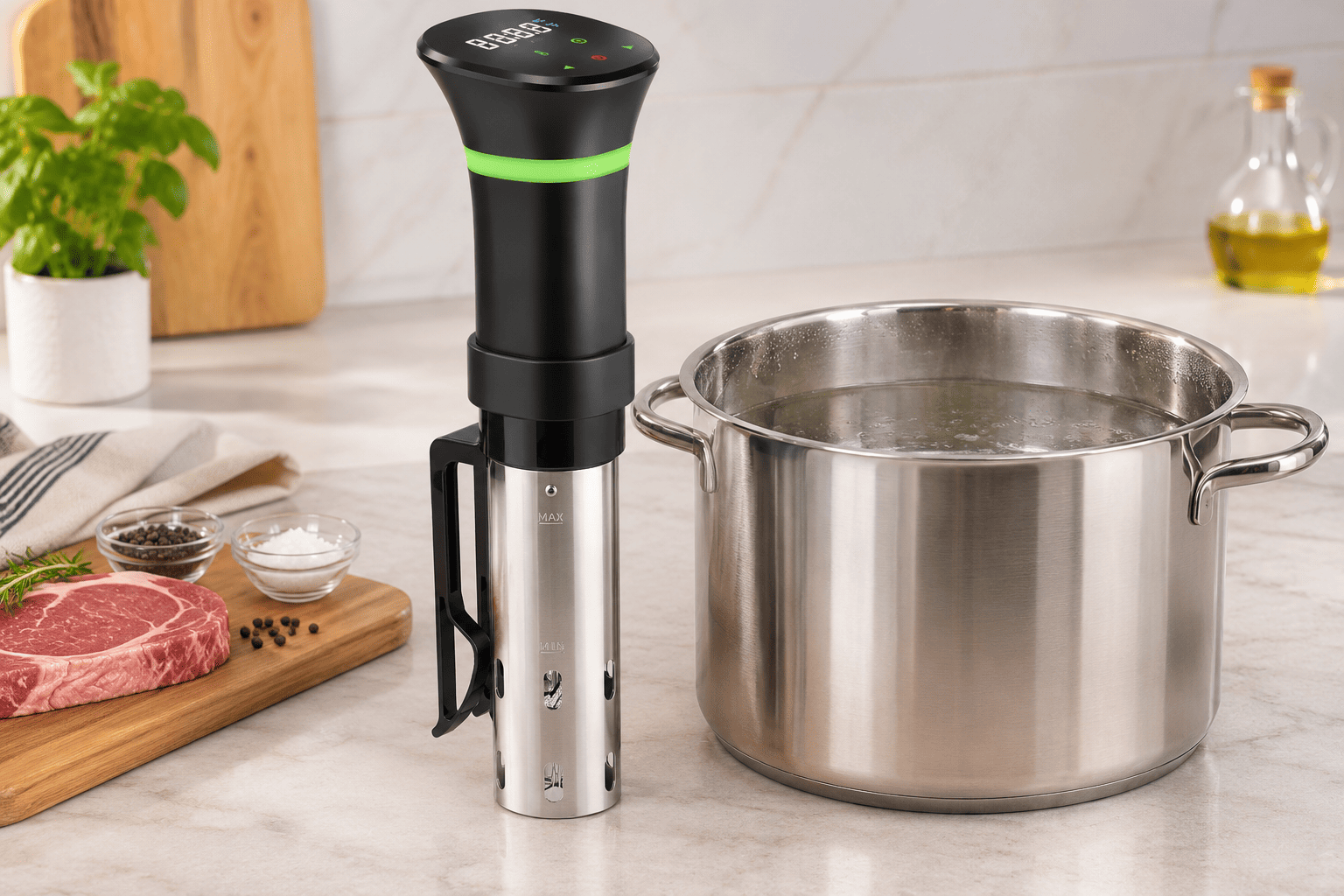
The Vpcok Direct 1000W Sous Vide Cooker makes sense if you want the core sous vide function without paying extra primarily for app connectivity. At the supplied listing price of $59.49, it’s substantially less expensive than the Anova model.
Vpcok lists a 1000W heating element, digital touch controls, a built-in timer, and water circulation. Its product information describes a temperature range up to approximately 198.5°F and compatibility with suitable containers up to about 15 liters, although published lower-limit details vary between listings and manuals.
For a straightforward kitchen setup, those are the features that matter. You attach the unit to a pot, fill it to the indicated level, and select the time and temperature from the machine itself. There’s no need to learn a phone app just to begin cooking.
Its useful features include:
- 1000W heater: Provides the advertised heating power for the water bath.
- Built-in time and temperature control: Keeps daily operation on the unit itself.
- Status indicator light: Helps show different cooking stages at a glance.
- Water circulation: Moves water around the food for more even heating.
- Compact immersion design: Can be stored separately when you’re finished.
- Recipe guide: Provides a starting point, though safety-critical timings should be checked against reliable, validated guidance.
The tradeoff is that the Vpcok doesn’t provide the same connected controls as the Wi-Fi Anova model. If you’re cooking in another room and want phone updates, the more expensive option may suit you better.
I also wouldn’t assume an inexpensive cooker holds its temperature as accurately as a premium model without independent measurements. For safety-sensitive food preparation, good recipes, careful setup, and monitoring still matter.
At about $59, this is the one I’d consider for a first sous vide experiment if you already have a suitable pot and don’t need app features. It gives you the fundamental water-bath method without a larger upfront commitment.
Anova vs Vpcok: Which Sous Vide Cooker Should You Buy?
Both products are advertised as 1000W immersion circulators, so the wattage alone isn’t a compelling reason to prefer one over the other. The meaningful differences are connectivity, controls, price, and the overall support experience.
- For Wi-Fi control: Anova is the more appropriate choice because it supports connected features.
- For a lower upfront cost: Vpcok is cheaper at the supplied $59.49 price.
- For manual cooking: Both offer controls on the device, so your phone isn’t essential for a basic cook.
- For app recipes and guides: Anova has a larger connected ecosystem, although some extras may require Premium.
- For a first experiment: Vpcok limits your financial commitment while still providing temperature-controlled water circulation.
- For regular, connected meal preparation: Anova may justify its higher price if you use the app features often.
The difference between the supplied prices is $50.50. I’d only spend that extra money if the connectivity, support, and interface have real value for your cooking habits. Both still require sensible handling and validated cooking instructions.
What Actually Matters Before Buying a Sous Vide Machine?
A reliable immersion circulator doesn’t need dozens of automatic presets. For most people, a clear interface and dependable temperature control are more useful than a long feature list.
Temperature accuracy: The machine should maintain the chosen water temperature consistently. Look for trustworthy measurements rather than assuming a precise display proves accuracy.
Container compatibility: Check the minimum water depth, maximum capacity guidance, and clamp design. A cooker is frustrating if it doesn’t fit the pot you own.
Control preferences: Decide whether you want to change settings directly on the device or monitor cooking through an app. Manual control is perfectly adequate for most recipes.
Noise and circulation: A smooth pump is useful for long cooking sessions, particularly in a kitchen close to your living area.
Safety and maintenance: Easy cleaning, low-water protection, and clear instructions matter more than decorative features. Follow the manufacturer’s setup limits every time.
Total cost: Include appropriate bags, a container if needed, and any optional app subscription. You don’t need an expensive vacuum sealer just to try the method.
Is Sous Vide Worth It If You Only Cook a Few Times a Week?
That depends on what you cook. If you prepare steak, chicken, pork chops, or similar proteins regularly and get frustrated by inconsistent results, sous vide can be genuinely useful. It can also help you plan meals around a predictable finish, provided you follow safe heating and storage practices.
If you mostly make quick stir-fries, sandwiches, pasta, or soups, you may find that the circulator stays in a cupboard. It won’t replace a skillet, and the time needed for a water bath may not fit your weekday routine.
I’d start by choosing three meals you genuinely want to make this way. If those are foods you cook often, the purchase has a much better chance of becoming useful rather than just another gadget.
Final Thoughts: A Sous Vide Machine Is Worth Buying for Control
Sous vide cooking is a practical way to control temperature and achieve repeatable results, particularly with meat, fish, and other foods that are easy to overcook. It doesn’t make every dinner faster, and it still takes good recipes, safe food handling, and a finishing step for browned flavor.
If you want convenient Wi-Fi features and expect to use your cooker regularly, I’d lean toward the Anova Precision Cooker 2.0 at the supplied $109.99 price. If you’re new to sous vide and want the essential temperature-controlled cooking experience at a lower cost, the Vpcok Direct 1000W at $59.49 is the more approachable choice.
You don’t need either machine to make a good dinner. But if consistent doneness is something you struggle with, a sous vide cooker can be a worthwhile addition to the tools you already use.