An Instant Pot can turn a few basic ingredients into a week of practical lunches and dinners. The biggest meal-prep advantage isn’t that every dish cooks instantly. It’s that you can make beans, grains, soups, chicken, and other staples with less hands-on attention, then combine them into different meals without starting from scratch every day.
Affiliate Disclaimer
This website participates in affiliate programs. We may earn a commission
when you purchase products through links on this page, at no additional
cost to you. Our recommendations are based on independent research and
honest opinions.
If you’re tired of cooking a full dinner after work, start with versatile batches instead of ten complicated recipes. These ten Instant Pot meal-prep ideas cover breakfasts, proteins, vegetables, and freezer-friendly meals. I’ll also explain which cooker size makes more sense, how to store everything safely, and when the Duo or Pro is worth buying.
Why the Instant Pot Works So Well for Weekly Meal Prep
A multicooker handles several jobs in one pot. You can sauté onions before pressure cooking chili, steam vegetables for lunch bowls, or use a slow-cooking program when dinner doesn’t need to be ready quickly. That flexibility matters more than having dozens of buttons.
Pressure cooking also works particularly well for ingredients that normally need a long simmer. Keep in mind that advertised cooking times often exclude preheating and pressure release, so a ten-minute pressure cycle doesn’t mean dinner is ready in ten minutes.
- Cook in building blocks: Prepare rice, beans, and protein separately so meals don’t all taste the same.
- Make larger portions: Soups and stews are easy to divide into individual containers.
- Use one pot for multiple stages: Sauté aromatics, then add liquid and pressure, cook.
- Plan for cleanup: Let the cooker cool and clean its lid, sealing ring, and inner pot after use.
1. Shredded Chicken for Tacos, Bowls, and Sandwiches
Chicken is one of the most flexible proteins to prepare ahead. Add boneless chicken breasts or thighs, broth, and a simple seasoning blend, then pressure cook using a tested recipe for your cut and thickness. Check that the center reaches 165°F before shredding, and use a little cooking liquid to keep the meat moist.
A single batch can become taco filling on Monday, a rice bowl on Tuesday, and a sandwich later in the week. Portion the chicken before refrigerating so you aren’t reheating the whole batch each time.
- Prep idea: Keep the basic seasoning mild, then add salsa, barbecue sauce, or herbs to individual portions.
- Best pairing: Rice, beans, chopped vegetables, or tortillas.
2. A Big Batch of Brown Rice or Quinoa
Grains are an easy meal-prep foundation because you can change the toppings without repeating the same dinner. The Instant Pot’s rice or pressure-cook functions can produce repeatable results once you find the correct ratio for your grain and model.
Brown rice generally needs more time than white rice, while quinoa cooks quickly. Follow a tested recipe and measure both the grain and liquid rather than guessing. Spread cooked grains into shallow containers for prompt cooling before refrigeration.
3. Dried Black Beans and Chickpeas Without Constant Stirring
Dried beans are inexpensive and useful for salads, burrito bowls, soups, and homemade hummus. Pressure cooking reduces the time you spend watching a pot on the stove, although soaking requirements and cooking times vary between varieties.
Beans expand and foam, so never fill the pressure cooker beyond the halfway line when cooking dried legumes. For kidney beans, follow established food-safety preparation guidance rather than improvising a short pressure cycle. Portion cooled beans with a little liquid to help prevent drying.
- Black beans: Use for burrito bowls, chili, or a quick bean salad.
- Chickpeas: Add to grain bowls, salads, curry, or hummus.
- Flavor tip: Freeze some plain and season others after cooking for more variety.
4. Turkey or Beef Chili That Tastes Better the Next Day
Chili is ideal for batch cooking because the meat, beans, tomatoes, and spices all come together in one dish. Sauté ground beef or turkey thoroughly, add the remaining ingredients and a suitable thin liquid, then use a tested pressure-cooker chili recipe.
Thick tomato products can scorch against the base, so deglaze after sautéing and layer ingredients as your recipe directs. Freeze portions separately, then rotate toppings such as yogurt, shredded cheese, or chopped green onions to keep lunches interesting.
5. Lentil Soup for Cheap, Filling Lunches
Lentil soup is one of the easiest ways to turn pantry ingredients into several meals. Lentils, carrots, onions, broth, and spices make a satisfying base, and you can add greens or lemon juice after cooking for freshness.
Different lentils behave differently: red lentils break down quickly, while green and brown varieties hold their shape better. A pressure-cooker recipe designed for the specific type helps you get the texture you want without ending up with either crunchy lentils or mush.
6. Steel-Cut Oatmeal for Busy Mornings
Steel-cut oats can make weekday breakfast much easier when you cook several servings together. Water or an appropriate liquid and oats create a simple base that you can reheat with a splash of milk later.
Pressure-cooked oatmeal can foam and expand, so follow the fill limits and release instructions for starchy foods. Store toppings separately: berries, cinnamon, nut butter, or chopped nuts taste better when added just before eating.
7. Pulled Pork for Several Different Dinners
Pork shoulder becomes tender with time and moist cooking, making it a good candidate for a pressure cooker. Cut the meat into suitable pieces, add liquid and seasonings, and follow a tested recipe that includes the necessary time for tenderness and safe handling.
Keep the base fairly neutral if you want several meals from one batch. Toss one portion with barbecue sauce, use another in rice bowls, and combine a third with beans and vegetables for tacos. Save some cooking juices for reheating.
8. Steamed Potatoes and Vegetables for Quick Sides
Your Instant Pot can steam potatoes, carrots, broccoli, and other vegetables using a compatible trivet or steamer basket. This is useful when you need quick sides without heating several pans at once.
The timing matters here: delicate vegetables can go from tender to overcooked quickly. Use the manufacturer’s ingredient guidance, and choose quick release only when the recipe and food type permit it. Season after cooking so you can pair each batch with different meals.
9. Chicken Curry That Freezes in Individual Portions
A simple chicken curry gives you more variety than a plain protein batch. Sauté onions and spices, add chicken with suitable liquid, and use a tested pressure-cooker recipe. If the sauce includes thick coconut cream or dairy, check whether the recipe calls for adding it after pressure cooking to avoid scorching or separation.
Freeze the curry separately from rice so each reheats properly. You can serve it with rice one day and flatbread another, which makes the same batch feel less repetitive.
10. Homemade Yogurt for Breakfasts and Snacks
Yogurt is a different kind of meal prep because it uses controlled heating and incubation instead of high-pressure cooking. Both of the Instant Pot models discussed below include a yogurt function, making it possible to prepare a batch for breakfasts, dips, or dressings.
Follow the model’s yogurt instructions carefully, including milk heating, cooling, starter addition, and refrigeration. A thermometer is helpful, and clean equipment matters. Portion the finished yogurt with fruit or granola only when you’re ready to eat.
How to Turn Those Ten Ideas Into a Realistic Meal-Prep Routine
You don’t need to cook all ten foods on Sunday. Choose one protein, one grain, one vegetable, and one flexible dish such as chili or soup. That gives you enough combinations to make lunch and dinner easier without filling the refrigerator with food you won’t finish.
- Weekend: Cook shredded chicken, brown rice, and a pot of chili.
- Early week: Serve chicken bowls and chili with different sides.
- Midweek: Make a fresh vegetable batch or switch to frozen portions.
- Next week: Rotate lentil soup, chickpeas, pulled pork, or curry instead of repeating the same menu.
Refrigerate perishable cooked food within two hours, or within one hour if the surrounding temperature exceeds 90°F. Use refrigerated leftovers within three to four days or freeze portions sooner; reheat leftovers to 165°F. These USDA recommendations are more important than stretching a five- or seven-day meal plan with the same refrigerated batch.
Which Instant Pot Is Worth Buying for Meal Prep?
Once you’ve decided that batch cooking suits your routine, cooker capacity becomes a practical consideration. A 6-quart model works well for many households, while an 8-quart unit provides extra room for soups, large cuts of meat, and bigger batches. The two models below share the core pressure-cooking features but differ in size, controls, and extra functions.
1
Instant Pot Duo 6 Qt Review: Best Value for Everyday Meal Prep

Instant Pot Duo 6 Qt 7-in-1 Electric Pressure Cooker is the simpler choice if you want a reliable place to start. At the user-provided price of $ 89.99, it offers a six-quart stainless-steel inner pot and seven cooking functions without requiring a premium budget.
Its main strengths are pressure cooking, slow cooking, steaming, sautéing, rice cooking, yogurt making, and keeping food warm. That covers nearly every meal-prep task in this guide. You can brown ingredients with sauté, switch to pressure cooking for a stew, and use the same inner pot for serving and cleanup.
The six-quart size is manageable for a small kitchen and can still prepare several servings of chicken, chili, or grains. The tradeoff is that big family batches may need to be split into separate runs, particularly when cooking expanding foods that must stay below the halfway fill line.
- Best for: Couples, small families, and first-time pressure-cooker owners.
- Useful functions: Pressure cook, sauté, steam, rice, yogurt, slow cook, and keep warm.
- Main tradeoff: Smaller usable batch capacity and fewer convenience controls than the Pro.
I would choose the Duo if you’re new to electric pressure cooking and want the essential functions. Its lower purchase price leaves room for storage containers and a food thermometer, which will likely matter more to your actual meal-prep routine than extra presets.
2
Instant Pot Pro 8 Qt Review: Best for Larger Weekly Batches
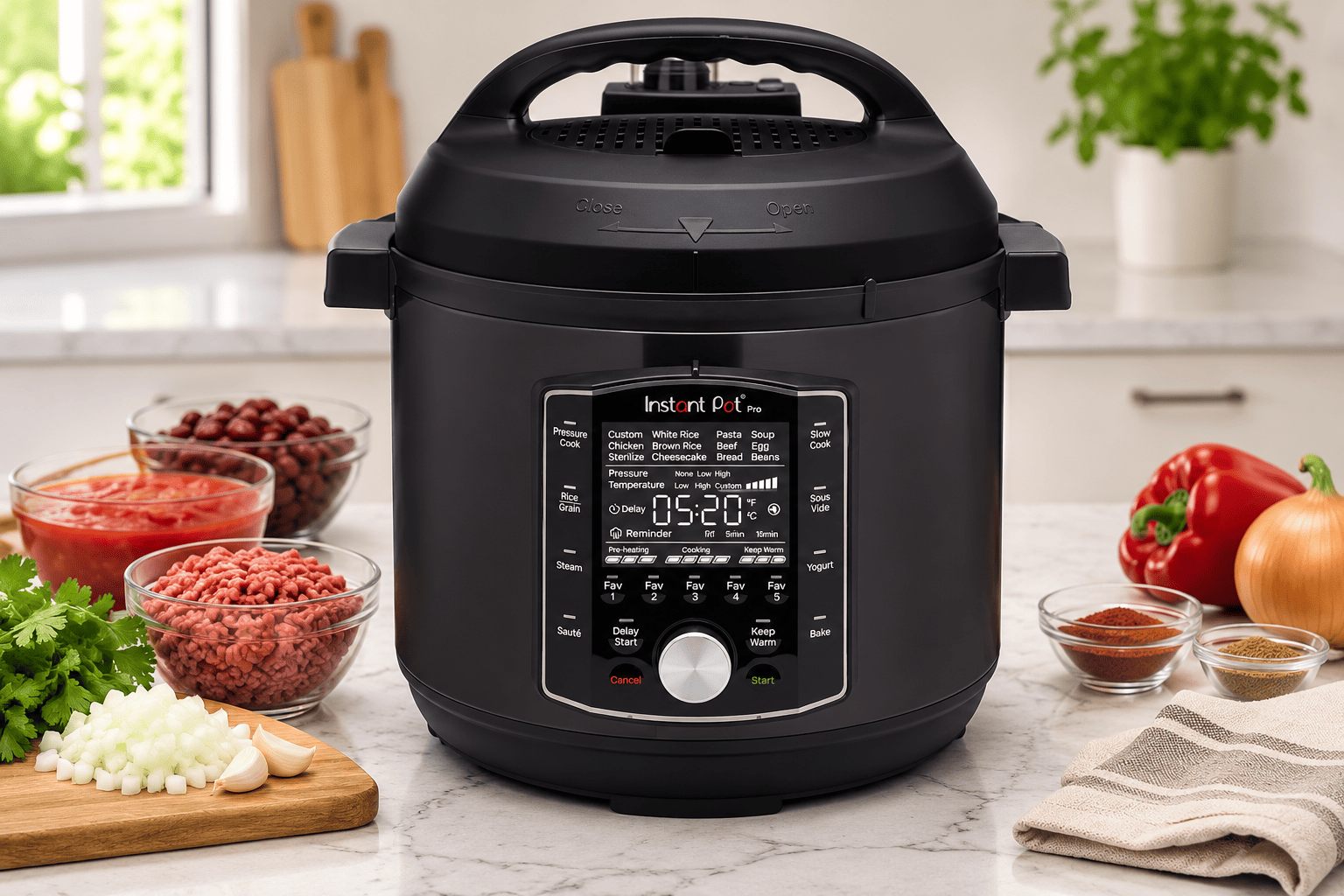
Instant Pot Pro 8 Qt 10-in-1 Electric Pressure Cooker is better suited to a household that regularly cooks more food at once. Its user-provided price of $ 199.99 is substantially higher than the Duo, but you get an eight-quart capacity, a more detailed display, and additional cooking options.
Beyond the core functions, the Pro includes sous vide and baking programs, plus customizable settings and favorite programs. Its inner pot has easy-grip handles, which are useful when you’re moving a heavy batch from the cooker to a safe cooling area. The cooker also includes a gentler steam-release arrangement.
The eight-quart capacity gives you more working room for chili, broth, pulled pork, and family meals. Remember that the listed capacity is the full volume of the pot, not the amount you can safely fill under pressure. Extra capacity also means a larger appliance to store and clean.
- Best for: Larger families and people who regularly freeze multiple portions.
- Useful upgrades: Eight-quart capacity, extra programs, handled inner pot, and customizable favorites.
- Main tradeoff: Higher cost and greater counter-space requirements.
I’d pay more for the Pro if you’re consistently preparing large batches or would use its additional programs. For a typical week of chicken, rice, beans, and soup, the Duo already does the core work very well.
The Safety and Storage Rules That Make Meal Prep Work
Pressure cooking is convenient, but the fill markings, steam-release instructions, and minimum liquid requirements are not optional. Instant Pot advises staying below the two-thirds fill mark for ordinary pressure cooking and below halfway for foods that expand, such as rice and beans. The proper amount of thin liquid also varies with cooker size and recipe.
- Before cooking: Check the sealing ring, valve position, recipe liquid, and fill limit.
- After cooking: Never force the lid open while pressure remains; follow the recipe’s release method.
- Before storage: Divide large hot batches into shallow containers for faster cooling.
- In the refrigerator: Keep food at 40°F or below and use most leftovers within three to four days.
- When reheating: Heat leftovers to 165°F and check with a thermometer.
Final Thoughts: Start With a Few Flexible Batches
The best Instant Pot meal prep isn’t a complicated weekend marathon. It’s a manageable routine built around ingredients you enjoy eating in different ways. Shredded chicken, beans, grains, chili, and soups are particularly useful because one batch can support several meals without much additional effort.
If you’re buying your first multicooker, I’d choose the Instant Pot Duo 6 Qt for most households. At the supplied $89.99 price, it handles the essential meal-prep jobs without much unnecessary expense. The Pro 8 Qt makes more sense if you regularly prepare bigger family portions or want its extra controls and cooking programs.
Choose two or three ideas from this list, portion and store them safely, and build from there. You’ll get more value from a repeatable routine than from trying every feature on the cooker in your first week.