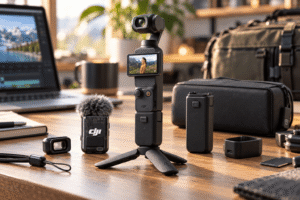
The DJI Osmo Pocket 3 changed the way many creators think about compact cameras. It offered something that smartphones and traditional cameras struggled to balance: professional-looking video quality in a device small enough to carry everywhere.
Affiliate Disclaimer
This website participates in affiliate programs. We may earn a commission
when you purchase products through links on this page, at no additional
cost to you. Our recommendations are based on independent research and
honest opinions.
Now, many creators are comparing the DJI Osmo Pocket 3 with newer Pocket 4-style camera options to decide whether upgrading is worth it. The main question is not simply which camera has more features. It is which one actually fits the way you create content.
In this comparison, I’ll explain what made the Osmo Pocket 3 popular, what improvements creators expect from a next-generation pocket camera, and how the available DJI Pocket 4-style combos compare for different types of video creation.
Why the DJI Osmo Pocket 3 Became Popular Among Creators
Before looking at newer options, it helps to understand why the Osmo Pocket 3 became such a popular choice.
The camera solved a common creator problem. Many people wanted better video than a smartphone could provide but did not want to carry a mirrorless camera, lenses, and a separate stabilizer.
The Osmo Pocket 3 offered a simpler approach.
It combined:
- A compact camera body
- A built-in 3-axis mechanical gimbal
- A large 1-inch CMOS sensor
- A rotating touchscreen
- Strong autofocus
- Wireless microphone support
The biggest advantage was the shooting experience. You could take it out, turn it on, and start recording smooth footage within seconds.
For vloggers, travel creators, and social media professionals, that convenience mattered as much as image quality.
A camera can have excellent specifications, but if it is difficult to carry or takes too long to set up, many creators simply will not use it regularly.
What Creators Want From a DJI Osmo Pocket 4
A next-generation pocket camera naturally creates expectations. Creators are looking for improvements that make everyday recording easier.
Some of the biggest areas where people expect upgrades include:
Better Image Quality
A larger sensor and improved image processing can help cameras perform better in difficult lighting.
Creators usually notice this in:
- Indoor videos
- Evening street shots
- Restaurant and café content
- Travel footage during sunset
Better image quality is not only about sharper footage. It is about keeping details visible when lighting conditions are not perfect.
More Flexible Shooting Options
Creators increasingly want cameras that can handle different situations without carrying extra equipment.
Useful improvements include:
- Better zoom options
- More frame rate choices
- Faster subject tracking
- Better portrait-style shooting
- Improved stabilization
The more situations a small camera can handle, the more valuable it becomes.
Faster Content Workflow
Modern creators often publish frequently. Recording is only one part of the process.
A good camera should also make it easier to:
- Transfer footage quickly
- Record vertical content
- Connect microphones
- Manage storage
- Edit efficiently
The best camera is usually the one that fits your workflow.
DJI Osmo Pocket 3 vs Pocket 4: What Actually Changes?
When comparing these two generations, the biggest difference is not only in hardware. It is the type of creator experience each camera offers.
The Osmo Pocket 3 focuses on simplicity. It is designed around smooth cinematic movement, reliable stabilization, and fast everyday recording.
The newer Pocket 4-style options focus more on expanding creative possibilities.
The main differences creators look at are:
Stabilization
The Osmo Pocket 3 uses a physical 3-axis gimbal, which is one of its biggest strengths.
A mechanical gimbal physically controls movement, creating smooth footage while walking or moving around.
This makes it especially useful for:
- Walking tours
- Travel videos
- Lifestyle content
- Talking videos
Newer compact cameras may add more intelligent features, but stabilization remains one of the biggest reasons creators choose the Pocket series.
Lens Flexibility
A fixed lens works well for many situations, but creators often want more flexibility.
The Pocket 4-style Vlog Combo listed here focuses on expanding creative options with a dual-lens design and optical zoom capability.
That can be useful when you want:
- Wider shots
- Closer subjects
- More framing choices
For travel creators, this can reduce the need to physically move closer or carry additional lenses.
Slow Motion Recording
Slow motion is becoming more popular for short-form content.
The listed Pocket 4P Vlog Combo highlights 4K/240fps recording, which is designed for capturing detailed slow-motion moments.
This type of feature is useful for:
- Sports clips
- Product shots
- Creative transitions
- Cinematic effects
However, high frame-rate modes are usually specialized tools. Most everyday vloggers will still spend more time shooting standard video modes.
Natural Transition: Choosing the Right Type of Pocket Camera
The biggest mistake many creators make is choosing a camera based only on specifications.
A camera with more features is not automatically the better choice.
The right camera depends on how you record.
Someone making YouTube travel videos needs different features from someone creating hands-free POV videos or short social media clips.
That is why looking at specific camera combos makes more sense than simply comparing numbers.
1
DJI Osmo Pocket 4P Vlog Combo, Dual-Lens Vlog Camera, Cinematic 4K
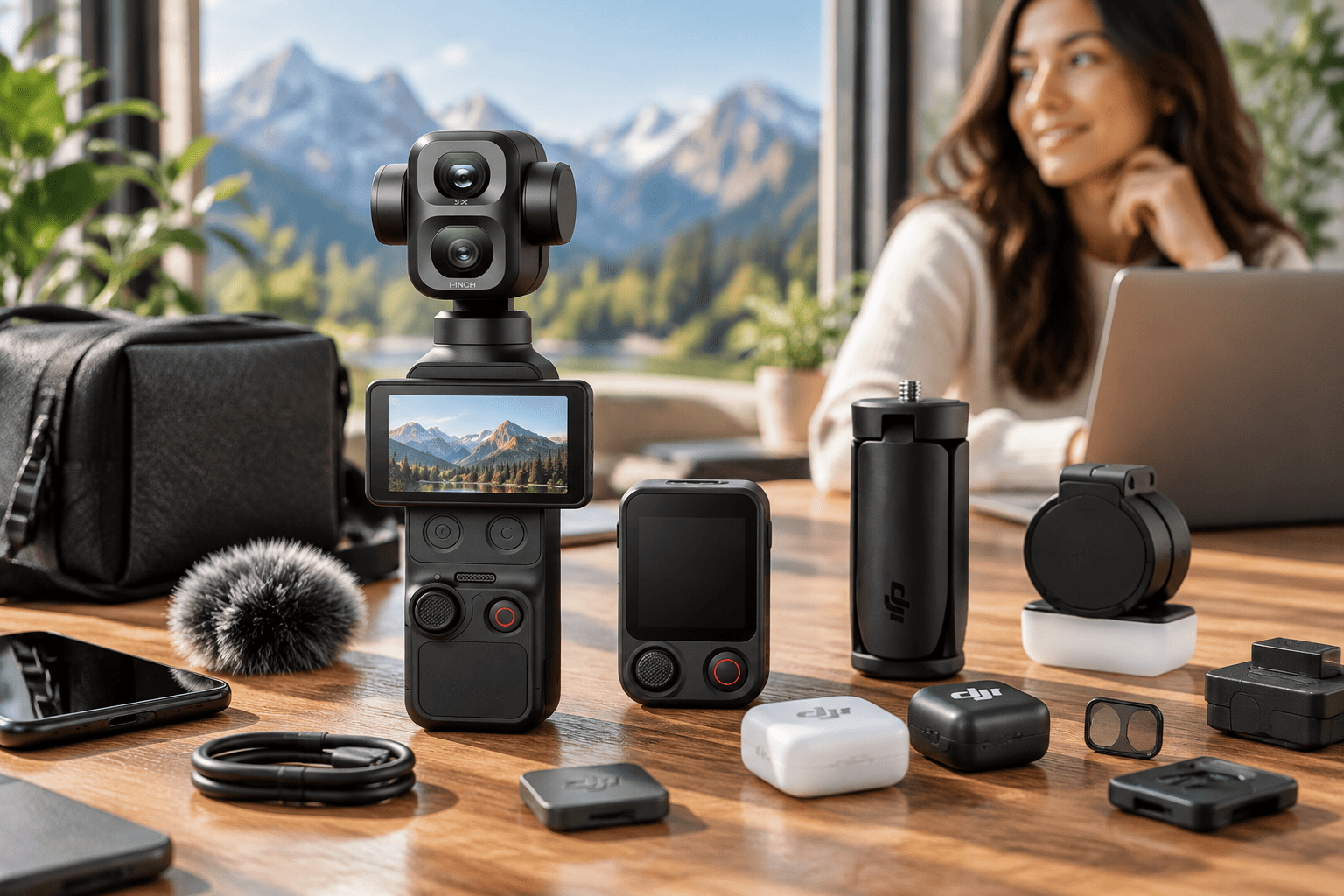
The DJI Osmo Pocket 4P Vlog Combo, Dual-Lens Vlog Camera, Cinematic 4K is designed for creators who want a more advanced pocket camera experience with additional shooting flexibility.
According to the provided listing, this combo focuses on features such as dual lenses, 3× optical zoom, 4K high-frame-rate recording, built-in storage, fill light, and microphone support.
The biggest appeal is versatility.
Traditional pocket cameras are excellent for close and medium-range shots, but zoom flexibility gives creators more options without changing their position.
This can be useful when recording:
- Travel scenes
- Street videos
- Events
- Product demonstrations
- Everyday vlogs
The included microphone transmitter also makes it more suitable for creators who speak on camera. Clear audio remains one of the biggest differences between casual videos and more professional-looking content.
Some features highlighted in the listing include:
- Dual-lens camera system
- 3× optical zoom
- Cinematic 4K video
- Fill light
- Built-in storage
- Mic Mini 2 TX support
The higher price point, listed around $738.09, means this type of camera is aimed at creators who already know they will use advanced features regularly.
It makes the most sense for someone who creates content frequently and wants a compact camera that can handle more situations without adding extra accessories.
If your priority is cinematic storytelling, travel content, and having more framing options in a small package, this type of setup offers more creative flexibility.
2
DJI Osmo Nano Standard Combo (128GB)
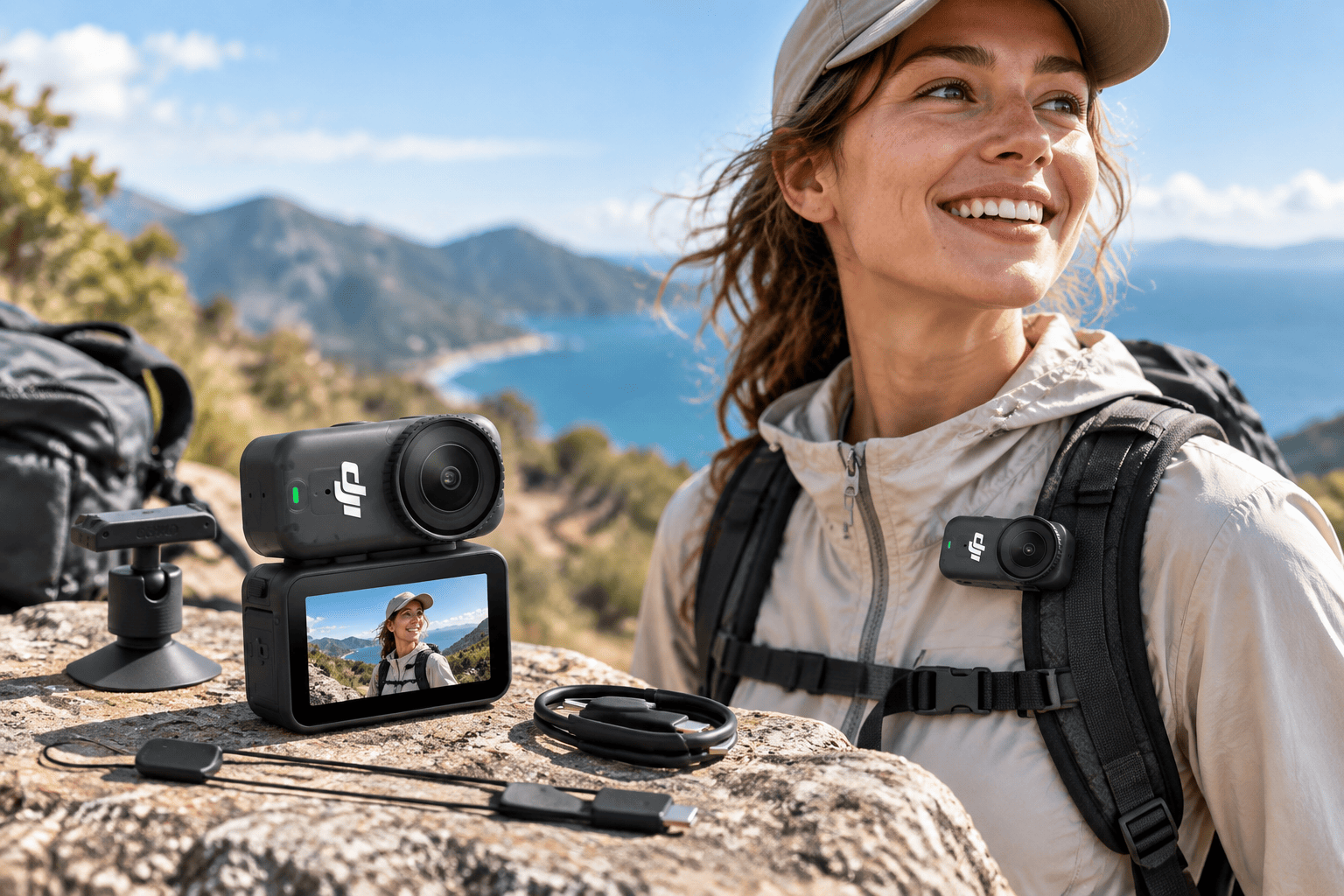
The DJI Osmo Nano Standard Combo (128GB) takes a completely different approach.
Instead of focusing on a traditional handheld pocket gimbal experience, it is designed around portability and hands-free recording.
This type of camera is built for creators who want to capture moments naturally without constantly holding a camera.
According to the provided listing, it includes:
- 1/1.3-inch sensor
- 4K/60fps recording
- 143° wide field of view
- Up to 200-minute battery claim
- Magnetic wearable design
- Fast content transfer
The magnetic design is one of its biggest advantages.
For certain types of content, holding a camera is actually a limitation. A wearable camera lets you focus on the activity while still capturing the experience.
It works well for:
- POV videos
- Travel moments
- Daily lifestyle clips
- Outdoor activities
- Behind-the-scenes content
The wide field of view also helps capture more of the environment, which is useful when you want viewers to feel like they are experiencing the moment with you.
At around $409 based on the listed price, it is more affordable than the Pocket 4P-style combo. However, it is designed for a different purpose.
It is not trying to replace a cinematic gimbal camera. Instead, it focuses on making recording easier and more natural.
For creators who value convenience and first-person content, this approach can be more useful than traditional camera movement.
What Should You Consider Before Choosing?
Before buying a compact camera, think about your actual recording habits.
Choose a Pocket 4-Style Gimbal Camera If You:
- Create YouTube videos
- Record travel content
- Film yourself speaking
- Want smoother cinematic movement
- Need more control over framing
A gimbal camera gives you a more traditional filmmaking experience in a smaller body.
Choose a Wearable Camera If You:
- Create POV content
- Record outdoor activities
- Want hands-free shooting
- Prefer natural moments over planned shots
- Need something easy to carry
A wearable camera removes friction from the recording process.
Consider Your Audio Needs
If you regularly talk in your videos, microphone support should be a major factor.
Good visuals attract attention, but clear audio keeps people watching.
Think About Your Posting Style
A creator who uploads daily short videos may value speed and convenience more than advanced settings.
Someone producing longer YouTube videos may appreciate better framing options and more control.
Final Verdict: Which Creator Combo Should You Buy?
The DJI Osmo Pocket 3 proved that a small camera can deliver professional-looking results without complicated equipment. The newer Pocket 4-style options continue that direction by adding more flexibility and creator-focused features.
The DJI Osmo Pocket 4P Vlog Combo makes more sense for creators who want a compact camera that feels closer to a complete production tool. The dual-lens approach, zoom capability, and included accessories are useful for travel creators, vloggers, and people who want more control.
The DJI Osmo Nano Standard Combo is better suited for creators who prioritize convenience. Its wearable design makes it easier to capture real moments without stopping to set up a shot.
If your content is built around storytelling, talking videos, and cinematic movement, choose the Pocket 4-style gimbal setup. If your content is about experiences, activities, and first-person moments, the wearable camera approach may fit your workflow better.
The best camera is not the one with the longest feature list. It is the one that makes you want to record more often.