The DJI Osmo Pocket 4 has become one of the most searched camera topics among vloggers and content creators who want a small camera with professional-looking results. While DJI has built a strong reputation with the Osmo Pocket series, creators are also watching how the next generation of compact cameras will improve areas like image quality, stabilization, audio, and AI-powered features.
Affiliate Disclaimer
This website participates in affiliate programs. We may earn a commission
when you purchase products through links on this page, at no additional
cost to you. Our recommendations are based on independent research and
honest opinions.
A good pocket camera solves a simple problem: you want better footage than a smartphone can provide, but you do not want to carry a large camera setup everywhere. The future of compact cameras is moving toward easier recording, hands-free shooting, better subject tracking, and faster content creation.
In this guide, I’ll explain what makes a pocket camera valuable, what creators should expect from a DJI Osmo Pocket 4-style camera, and look at two interesting alternatives available today: the DJI Osmo Nano Vlog Combo and the Insta360 Luna Ultra.
Why Pocket Cameras Are Becoming More Popular
Smartphones are excellent for casual videos, but dedicated compact cameras still have advantages when you want consistent quality. The biggest difference is not always resolution. It is the overall shooting experience.
A dedicated camera gives you more control over stabilization, audio, framing, and creative options. It also feels more intentional because the device is built specifically for recording.
For many creators, the biggest challenge is not knowing how to shoot. It is actually carrying the equipment and setting everything up.
A compact camera makes that process easier.
The ideal pocket camera should offer:
- Fast startup when an idea appears
- Stable footage while walking
- Good low-light performance
- Reliable autofocus
- Simple audio connection
- Easy transfer and editing
This is why cameras like the DJI Osmo Pocket series became popular. They focused on making high-quality video more accessible without adding the complexity of traditional camera equipment.
What Creators Expect From a DJI Osmo Pocket 4
Although there is no official DJI Osmo Pocket 4 available at the time of writing, the expectations around a future model are easy to understand.
Creators are looking for improvements in the areas that matter during everyday shooting.
Better Image Quality
A larger sensor has always been one of the biggest advantages in compact cameras. It helps capture more light and creates cleaner footage, especially indoors or during evening shoots.
Future pocket cameras will likely continue improving:
- Dynamic range
- Low-light performance
- Color accuracy
- Detail retention
These improvements matter because creators usually record in real environments, not perfect studio lighting.
Smarter Tracking and AI Features
Modern cameras are becoming more intelligent. Features like subject tracking and automatic framing reduce the amount of manual adjustment needed.
For solo creators, this is especially useful because you often need to operate the camera while also being in front of it.
AI-powered features can help with:
- Keeping subjects centered
- Following movement
- Simplifying editing
- Creating better compositions
Better Audio Options
Many creators learn this after buying their first camera: good audio matters almost as much as good video.
A viewer may forgive slightly imperfect footage, but poor sound quality quickly makes content feel less professional.
That is why compact cameras are increasingly focusing on wireless microphone support and cleaner built-in audio.
Gimbal Cameras vs Wearable Cameras
Not every compact camera is designed for the same type of content.
A pocket gimbal camera and a wearable camera may both be small, but they solve different problems.
A gimbal camera is designed for controlled movement.
It works especially well for:
- Walking vlogs
- Travel videos
- Talking-head content
- Product videos
- City exploration
The physical stabilization creates smooth movement that looks more cinematic.
A wearable camera focuses more on capturing moments naturally.
It works better for:
- First-person videos
- Outdoor activities
- Daily life recording
- Hands-free content
The camera you choose should match the way you create. A travel filmmaker and an adventure creator may both need a small camera, but their requirements are completely different.
Where Compact Cameras Are Going Next
The future of small cameras is not just about adding more megapixels. It is about making content creation easier.
Creators are looking for cameras that can:
- Record instantly
- Understand the scene
- Follow movement automatically
- Capture better audio
- Transfer footage quickly
- Reduce editing time
That is why newer compact cameras are focusing more on workflow rather than only hardware specifications.
A camera that saves you time can be more valuable than one with slightly better technical numbers.
1
DJI Osmo Nano Vlog Combo (128GB)
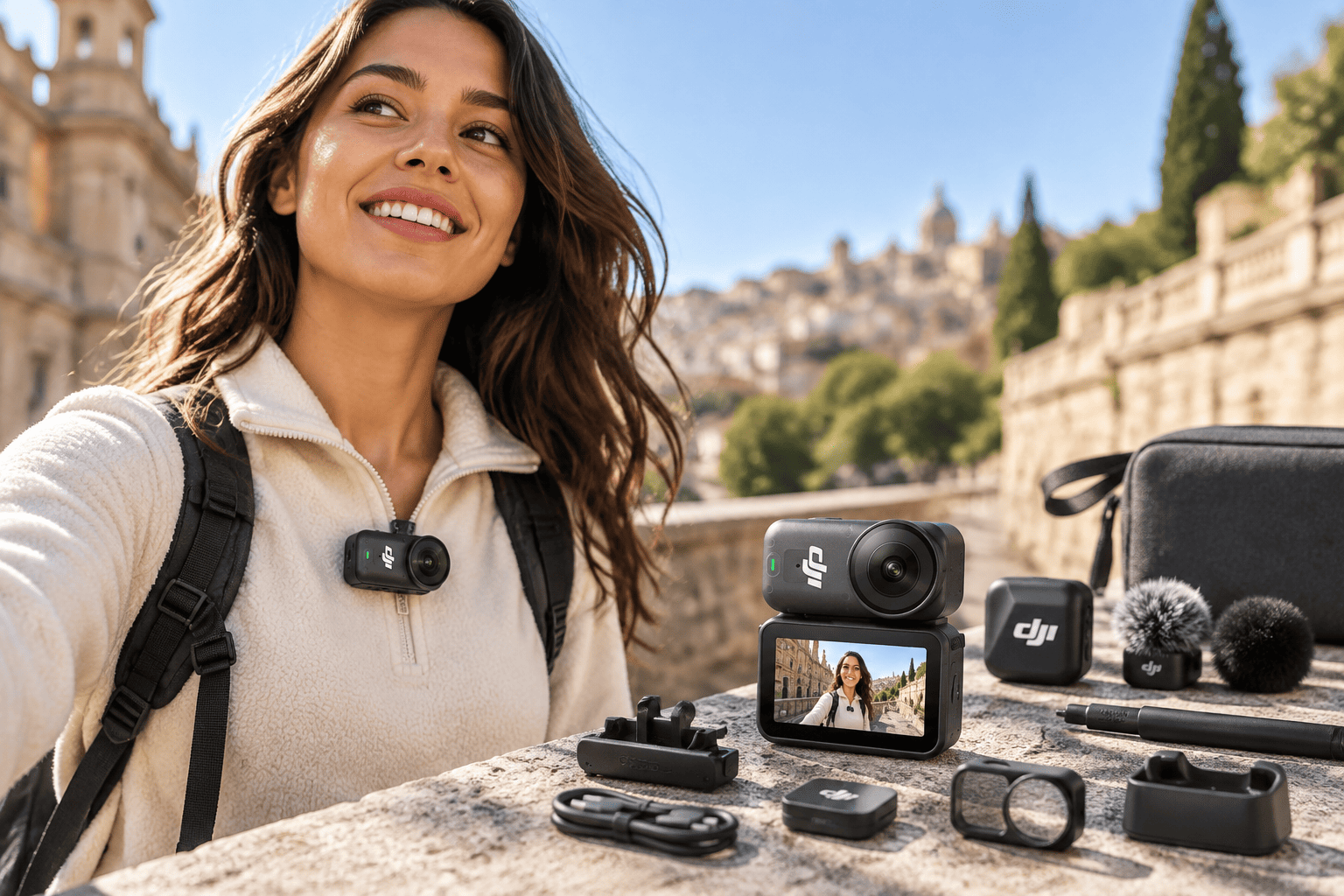
As creators wait for the next generation of pocket cameras, smaller wearable cameras are becoming an interesting alternative. The DJI Osmo Nano Vlog Combo (128GB) takes a different approach by focusing on hands-free recording and first-person content.
Instead of being a traditional handheld gimbal camera, this type of camera is designed for capturing moments naturally without constantly holding a device.
The biggest advantage is convenience.
The camera includes a DJI Mic Mini transmitter, which makes it more suitable for creators who want better voice recording without carrying additional audio equipment.
Some important features include:
- 4K video recording at up to 60fps
- Wide 143-degree field of view
- Magnetic wearable design
- Hands-free POV recording
- Included DJI Mic Mini transmitter
- 128GB storage configuration
The wide field of view is useful for capturing more of your surroundings. This makes it practical for walking videos, daily activities, travel clips, and behind-the-scenes content.
The wearable design also changes how you create. Instead of stopping, positioning a camera, and pressing record, you can capture moments while keeping your hands free.
This style works especially well for creators who want more natural footage. Cooking videos, travel experiences, outdoor activities, and personal storytelling can benefit from a first-person perspective.
However, this type of camera is not a replacement for a gimbal camera. A wearable camera prioritizes convenience and perspective, while a gimbal camera focuses more on controlled cinematic movement.
At around $497.99 based on the listed price, it sits in a higher price category, so it makes the most sense for creators who specifically need hands-free recording and wireless audio.
2
Insta360 Luna Ultra
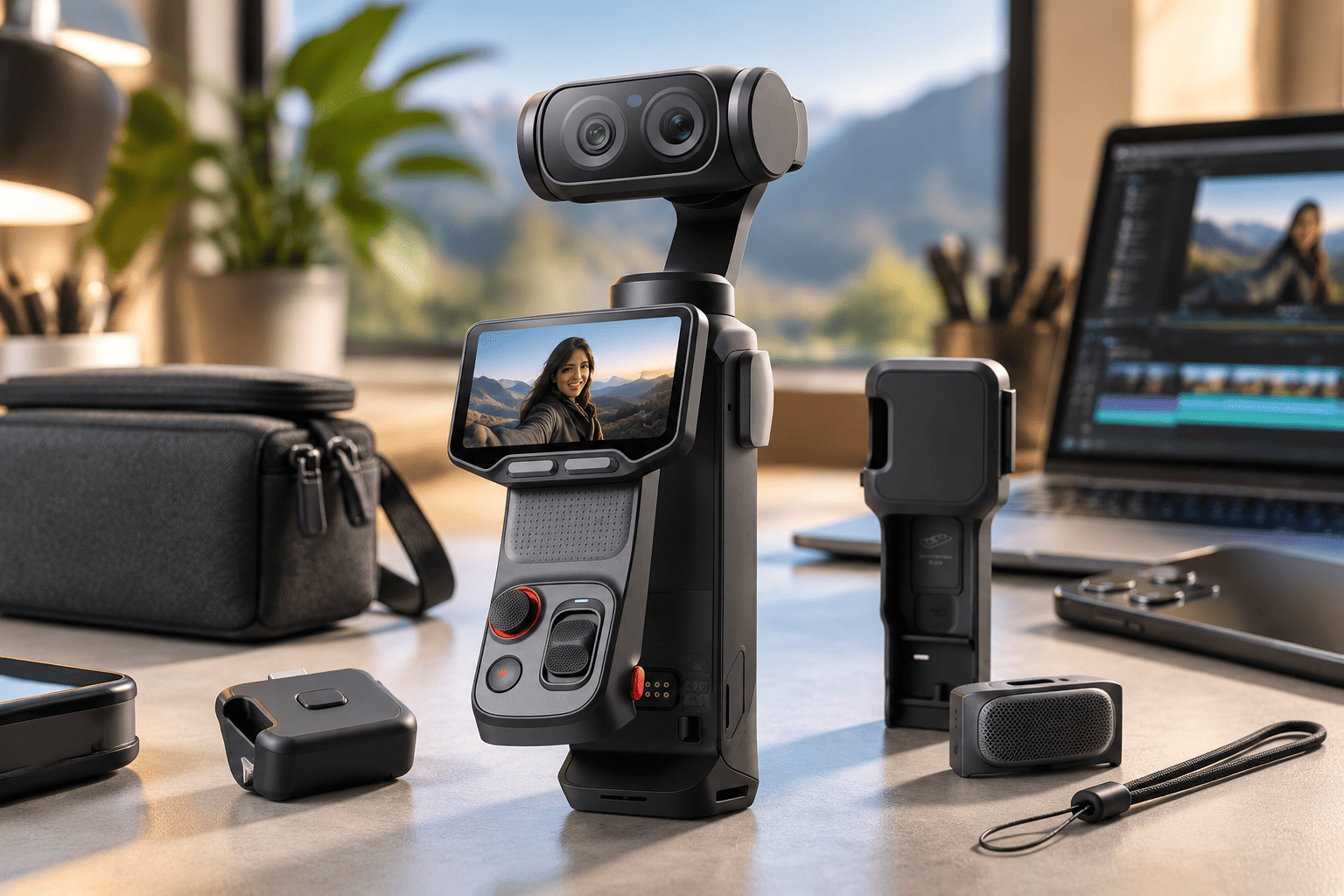
Another direction in compact cameras is combining high-resolution video, advanced lenses, and AI-powered features. The Insta360 Luna Ultra is designed around that idea, targeting creators who want more flexibility from a small camera.
According to the provided listing, the camera features 8K recording, dual Leica lenses, a 1-inch sensor, 15x zoom, a detachable 2-inch touchscreen, and multiple AI processing features.
The focus here is versatility.
A larger sensor can help improve image quality, especially when shooting in more difficult lighting conditions. The detachable touchscreen design also gives creators more flexibility when framing shots.
Some notable features include:
- High-resolution video recording
- 1-inch sensor
- Dual lens system
- Detachable touchscreen
- AI-powered processing features
- Pocket-friendly design
For creators who like experimenting with different styles, the ability to adjust framing and use different perspectives can be valuable.
This type of camera is better suited for creators who want more creative options without moving into a full interchangeable-lens camera system.
The trade-off is that advanced features often come with a learning curve. More options mean more settings to understand, especially if you want to get the most out of the camera.
At around $769.99 based on the listed price, it is positioned as a higher-end compact camera for creators who want more flexibility and are willing to invest in additional features.
What Should You Look For Before Buying a Compact Camera?
Choosing a pocket camera is easier when you focus on your actual workflow instead of only specifications.
Think About Your Content Style
Your content type should decide your camera.
A gimbal-style camera is usually better for:
- YouTube vlogs
- Travel storytelling
- Walking videos
- Talking videos
A wearable camera is better for:
- POV content
- Adventure videos
- Hands-free recording
- Daily life moments
Consider Audio Quality
If you speak in your videos, microphone support should be one of your main considerations.
A camera with wireless microphone compatibility can improve your content more than a small upgrade in resolution.
Look at Your Editing Process
Some cameras create beautiful footage but require more editing.
Others are designed for quick recording and fast sharing.
If you post frequently, a simple workflow can save hours every month.
Think Long-Term
A good camera should match how you create today and how you plan to create in the future.
Buying the most advanced camera is not always the right choice if you will only use a small portion of its features.
Final Thoughts
The excitement around the DJI Osmo Pocket 4 shows how much creators want compact cameras that combine professional quality with everyday convenience. The future of pocket cameras is moving toward smarter features, easier workflows, and more flexible ways to record.
For creators who want hands-free shooting and a natural first-person perspective, the DJI Osmo Nano Vlog Combo offers an interesting approach with wearable recording and wireless audio support.
For creators who want more advanced imaging features, higher resolution, and more creative control, the Insta360 Luna Ultra provides a different style of compact camera experience.
The right choice depends on how you create. If your content is built around personal experiences and real moments, a wearable camera may fit your workflow better. If you want more control over composition and storytelling, a more advanced pocket camera will likely make more sense.