If you create videos for YouTube, TikTok, Instagram, travel content, or personal projects, carrying a large camera setup is not always practical. The DJI Osmo Pocket 3 Creator Combo has become one of the most talked-about compact cameras because it combines a large sensor, built-in gimbal stabilization, fast autofocus, and wireless audio in a device that can fit in your pocket.
Affiliate Disclaimer
This website participates in affiliate programs. We may earn a commission
when you purchase products through links on this page, at no additional
cost to you. Our recommendations are based on independent research and
honest opinions.
In this review, I’ll break down what makes the Osmo Pocket 3 different, where it performs well, where it has limitations, and whether it is the right camera for your type of content. I’ll also compare it with another popular DJI option, the Osmo Action 4, because the two cameras look similar on paper but are designed for very different situations.
Why Compact Cameras Are Becoming Popular Again
Smartphones have become surprisingly good at recording videos, but dedicated cameras still have advantages when you want more control, better stabilization, and a more professional look.
The challenge has always been size. Many people do not want to carry a mirrorless camera, multiple lenses, a microphone, and a stabilizer just to capture everyday moments. That is where compact cameras have found their place.
A good pocket camera gives you:
- Better stability than handheld phone footage
- More consistent video quality
- Dedicated controls for shooting
- Better audio options
- Faster setup when you want to record quickly
For vloggers and content creators, speed matters. The best camera is often the one you actually have with you when something interesting happens.
The DJI Osmo Pocket 3 stands out because it does not simply act as a small video camera. It combines a camera sensor with a mechanical 3-axis gimbal, which physically keeps the camera steady while you move.
That difference is important because electronic stabilization on phones and action cameras works by cropping and processing footage. A mechanical gimbal physically controls movement, which creates smoother camera motion, especially when walking.
What Makes the DJI Osmo Pocket 3 Different?
The biggest upgrade in the Osmo Pocket 3 compared with previous versions is the camera sensor.
It uses a 1-inch CMOS sensor, which is much larger than what you typically find in compact cameras of this size. A larger sensor helps capture more light, which improves image quality in challenging conditions such as indoor scenes, evening shots, and city environments at night.
The camera records up to 4K video at 120fps in slow motion mode and supports 10-bit D-Log M color recording for creators who want more flexibility during editing.
For everyday creators, the biggest benefits are not just numbers on a specification sheet. They are things you notice while shooting.
The Osmo Pocket 3 offers:
- A large 2-inch rotating touchscreen that switches between horizontal and vertical recording
- 3-axis mechanical stabilization
- ActiveTrack 6.0 subject tracking
- Fast focusing with full-pixel fast focusing technology
- Built-in stereo microphones
- Support for external DJI microphones
- Compact pocket-friendly design
The rotating screen is especially useful for social media creators. Instead of physically turning the camera or adjusting settings, you can quickly switch between landscape videos for YouTube and vertical videos for TikTok or Instagram.
Is a Gimbal Camera Better Than an Action Camera?
This is where many people get confused.
The DJI Osmo Pocket 3 and DJI Osmo Action 4 can both record high-quality video, but they solve different problems.
A gimbal camera like the Osmo Pocket 3 is designed for controlled movement. It is excellent when you are walking through a city, filming yourself, recording talking-head videos, or creating cinematic shots.
An action camera like the Osmo Action 4 is designed for durability. It handles water, dust, drops, and extreme activities better.
Think about your shooting style:
If you mostly record:
- Travel videos
- Daily vlogs
- Talking videos
- Food content
- Product videos
- Indoor content
A pocket gimbal camera makes more sense.
If you mostly record:
- Cycling
- Hiking
- Swimming
- Sports
- Outdoor adventures
An action camera is usually the better fit.
The camera choice is not about which one has better specifications. It is about which tool matches the way you create.
Why the Creator Combo Makes More Sense for Many Creators
The standard Osmo Pocket 3 already gives you the main camera experience, but the Creator Combo is designed for people who want to start recording immediately.
The package includes additional accessories that make a noticeable difference, especially for vloggers.
The Creator Combo typically includes:
- DJI Mic 2 wireless microphone transmitter and receiver
- Battery handle
- Wide-angle lens
- Mini tripod
- Carrying case
- Additional accessories
The microphone is one of the biggest reasons many creators choose the bundle. Video quality gets attention, but poor audio can make even beautiful footage feel amateur.
A wireless microphone lets you record cleaner voice audio while keeping the camera farther away. This is useful for walking videos, interviews, tutorials, and outdoor recordings.
The battery handle is also practical because it extends recording time and gives you a more comfortable grip when filming for longer periods.
If you already own microphones and accessories, the standard camera may be enough. But if you are building your setup from scratch, the Creator Combo saves you from buying separate accessories later.
1
DJI Osmo Pocket 3 Vlogging Camera DJI Osmo Pocket 3 Vlog Bundle
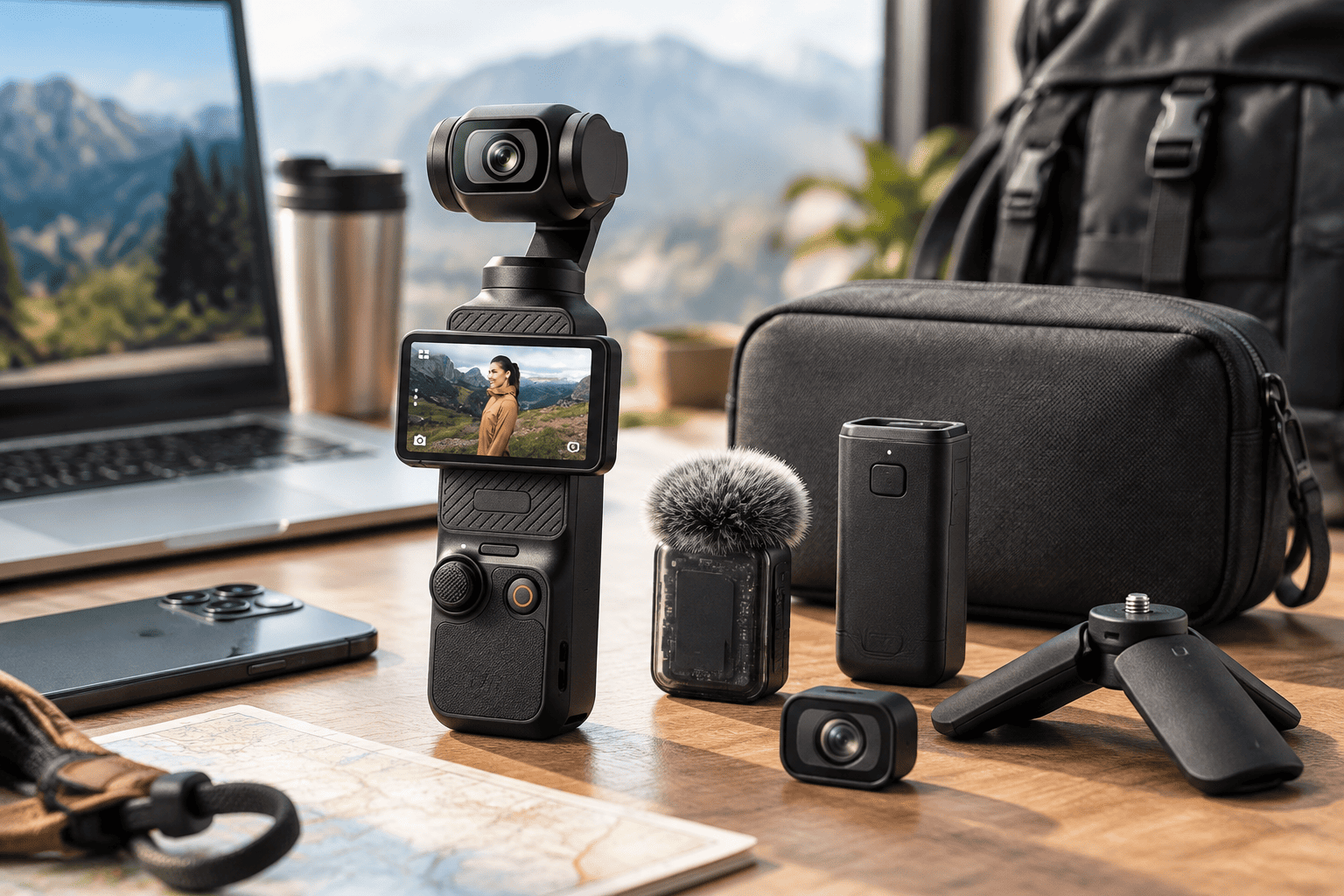
The DJI Osmo Pocket 3 Vlogging Camera DJI Osmo Pocket 3 Vlog Bundle is built for creators who want professional-looking footage without carrying a full camera kit.
The first thing you notice when using it is how quickly you can start recording. The camera turns on, the gimbal stabilizes, and you are ready to capture footage within seconds. That simplicity is a major advantage for everyday content creation.
The 1-inch sensor produces detailed footage with good dynamic range, especially in situations where smaller cameras often struggle. Indoor videos, evening walks, and restaurant footage generally look cleaner because the sensor can capture more light.
The built-in gimbal is where the camera really separates itself from phones. Walking shots have a smoother, floating look without needing a separate stabilizer. For travel creators, this means you can move naturally while still getting stable footage.
Some features that make it useful for creators include:
- ActiveTrack 6.0: Keeps subjects centered while recording moving shots.
- Rotating touchscreen: Makes switching between vertical and horizontal videos simple.
- Fast autofocus: Helps keep faces and subjects sharp.
- D-Log M recording: Gives advanced creators more control during color editing.
- Wireless microphone support: Makes professional audio easier.
The main limitation is durability. This is not a camera you want to take underwater or throw into extreme environments. The exposed gimbal mechanism is designed for smooth filming, not rough outdoor activities.
At around $446 for the bundle at the time of writing, it is not the cheapest compact camera, but the included accessories make the package more valuable for creators who need audio and extra battery support.
The Osmo Pocket 3 Creator Combo is best for vloggers, travel creators, social media professionals, and anyone who wants a camera that delivers high-quality footage without a complicated setup.
2
DJI Osmo Action 4 Essential Combo
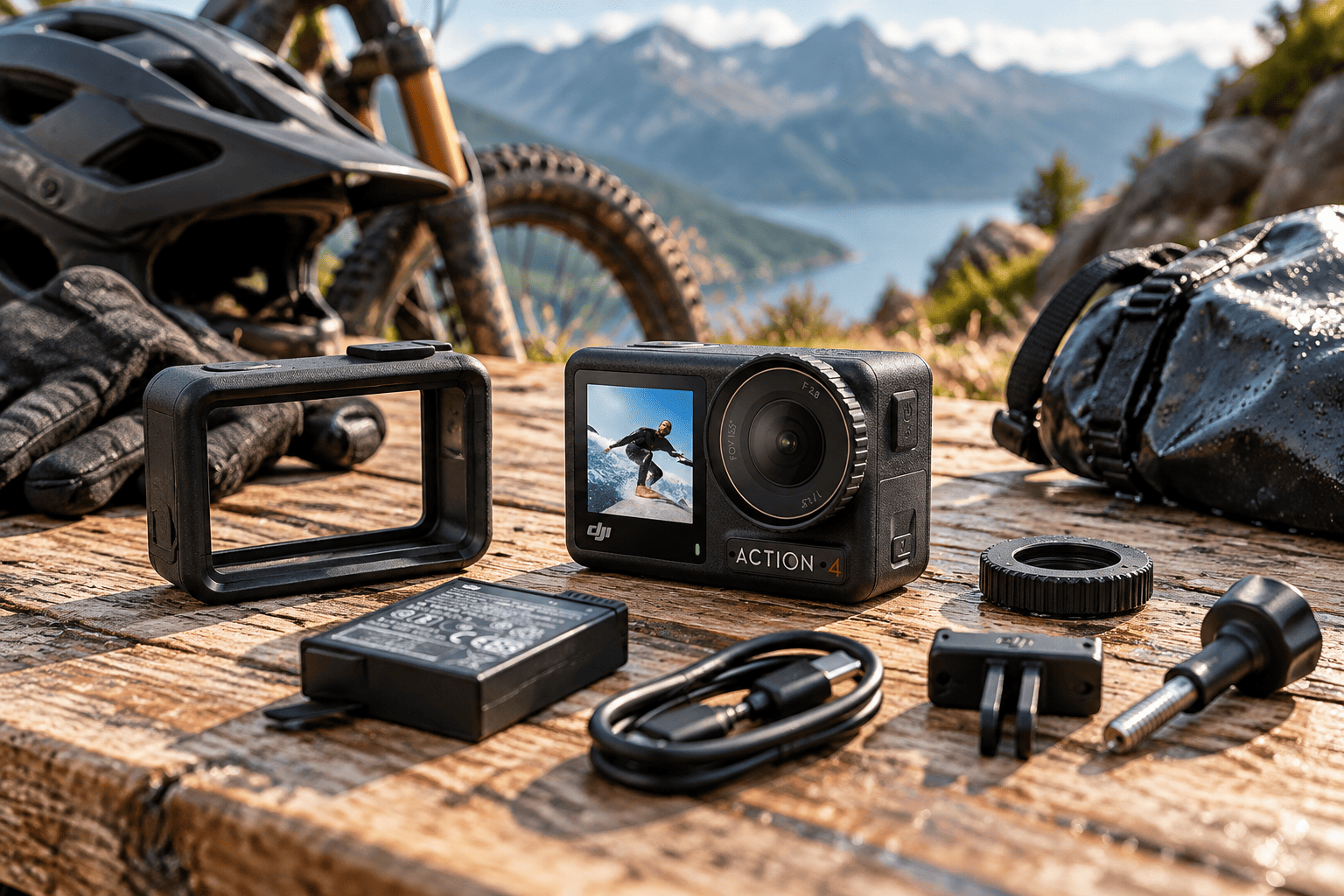
A pocket gimbal camera is not the right choice for everyone. Some creators need something tougher, and that is where the DJI Osmo Action 4 Essential Combo comes in.
The Osmo Action 4 is an action camera designed for situations where durability matters more than cinematic movement.
It uses a 1/1.3-inch sensor and can record 4K video at up to 120fps. While the sensor is smaller than the Osmo Pocket 3’s 1-inch sensor, it still delivers strong image quality and performs well outdoors.
The biggest advantage is how much abuse it can handle.
The Osmo Action 4 offers:
- Waterproof design without an additional case
- RockSteady 3.0 electronic stabilization
- HorizonSteady for keeping footage level
- Front and rear touchscreens
- 10-bit D-Log M color recording
- Long battery performance with up to around 160 minutes under specific conditions
For adventure creators, this design makes more sense. You can mount it on a bike, take it near water, or use it during activities where you would not risk a gimbal camera.
The trade-off is that it does not create the same smooth camera movement as the Osmo Pocket 3. Electronic stabilization is excellent, but it works differently from a physical gimbal.
The Action 4 is also less focused on traditional vlogging. While you can absolutely use it for talking videos, the fixed wide-angle perspective and action-focused design make it better suited for outdoor shooting.
At around $229, it is significantly more affordable than the Osmo Pocket 3 Creator Combo. For someone who wants a durable camera for travel, sports, or outdoor adventures, it offers a lot of value.
What Should You Consider Before Buying a Pocket Camera?
Choosing between compact cameras is less about chasing the highest specifications and more about understanding your workflow.
Here are the things that matter most:
Your Main Content Type
Think about what you record most often.
Choose a gimbal camera if you create:
- Walking videos
- Lifestyle content
- YouTube vlogs
- Tutorials
- Product demonstrations
Choose an action camera if you create:
- Adventure videos
- Sports content
- Outdoor activities
- Underwater footage
Audio Quality
Many beginners focus heavily on camera quality and ignore sound.
A good microphone often improves your videos more than a small upgrade in image quality. If you talk on camera regularly, a bundle with wireless audio support can be worth paying extra for.
Portability
The biggest advantage of these cameras is convenience.
A camera that stays in your bag and takes seconds to set up will usually get more use than a larger camera system that requires preparation.
Editing Needs
If you simply want to record and upload, both cameras work well.
If you enjoy color grading and want more control, features like 10-bit recording and D-Log M give you more flexibility.
Final Verdict: Is DJI Osmo Pocket 3 Really the Best Pocket Camera?
The DJI Osmo Pocket 3 is one of the most capable compact cameras available because it solves several creator problems at once. It gives you smooth stabilization, strong image quality, reliable autofocus, and easy vertical content creation in a genuinely portable design.
For most vloggers, travel creators, and everyday content creators, the Osmo Pocket 3 Creator Combo is the more complete package. The included microphone and accessories make it ready for serious content creation without needing extra purchases.
The DJI Osmo Action 4 is a better match if your priority is durability, outdoor activities, or adventure recording. It is cheaper, tougher, and designed for situations where a gimbal camera would be risky.
If your videos are about people, places, stories, and daily experiences, the Osmo Pocket 3 is likely the camera you will enjoy using more. If your videos are about action and extreme environments, the Action 4 is the safer choice.